Chiba Heavy Rain Disaster (August 2026): What Foreign Residents Need to Know
On August 13–14, 2026, record-breaking rain fell on Chiba and the wider Kanto region — an event the Japan Meteorological Agency named the “August 2026 Chiba Heavy Rain.” A rare Emergency Warning (the highest, Level 5) was issued. Here is what happened, why heavy rain is so dangerous, and what foreign residents should do.
If you are in an affected area
When your municipality issues evacuation information, act on it early. Never walk or drive into floodwater — most deaths in this disaster involved flooded roads and cars. If it is already too dangerous to leave, move to the highest floor and away from slopes. Follow the latest instructions from your city and the JMA.
⚠️ This is a developing situation. Figures below are preliminary and were being updated by authorities. Always confirm the latest details with official sources.
What happened
From the afternoon of August 13, 2026, extremely heavy rain fell on Chiba Prefecture and parts of Kanto as linear rain bands (senjō kōsuitai) formed and stalled over the area. The Japan Meteorological Agency recorded astonishing short-time rainfall — around 110 mm in one hour near Kashiwa and about 100 mm near Abiko on the 13th, and on the 14th roughly 120 mm/hour near Yachiyo and about 110 mm near Funabashi and Shiroi. Multiple “Record-breaking Short-time Heavy Rain” bulletins were issued.
The JMA formally named the event the “August 2026 Chiba Heavy Rain.” The agency only names weather events it judges especially severe — this was the first named rain event in about six years.
A rare Emergency Warning (Level 5)
The JMA issued an Emergency Warning (tokubetsu keihō) for heavy rain and landslides — the top of Japan's 5-level warning scale, meaning a disaster of a scale seen only once in decades may already be occurring. It was the first Emergency Warning since the JMA updated its alert system earlier in 2026. Here is what the levels mean and what to do:
- Elderly and people who need more time should start evacuating.
- Everyone must evacuate from dangerous areas. Do not wait for Level 5.
- A disaster may already be happening. Act immediately to protect your life — safe evacuation may no longer be possible, so move to higher ground/floor now.
Reported impact (preliminary)
As of the evening of August 14, authorities and NHK reported:
- 8 people dead and 1 missing, with the deaths linked to flooding — several victims were caught on flooded roads or trapped in cars in cities such as Ichikawa, Yachiyo, and Sakura.
- At least 178 buildings damaged.
- Evacuation orders reaching more than 400,000 people in Chiba, with over half a million people across Chiba and Ibaraki under evacuation information at one point.
- Widespread transport disruption; large numbers of people stranded, with roughly 1,800 spending the night at the Chiba Prefectural Government building.
Casualty and damage figures were preliminary and being updated. Please rely on official sources for current numbers.
Why heavy rain and floods are so deadly
Floods rarely look as dramatic as an earthquake, but they kill — and this disaster showed why. The biggest dangers are on the ground you use every day:
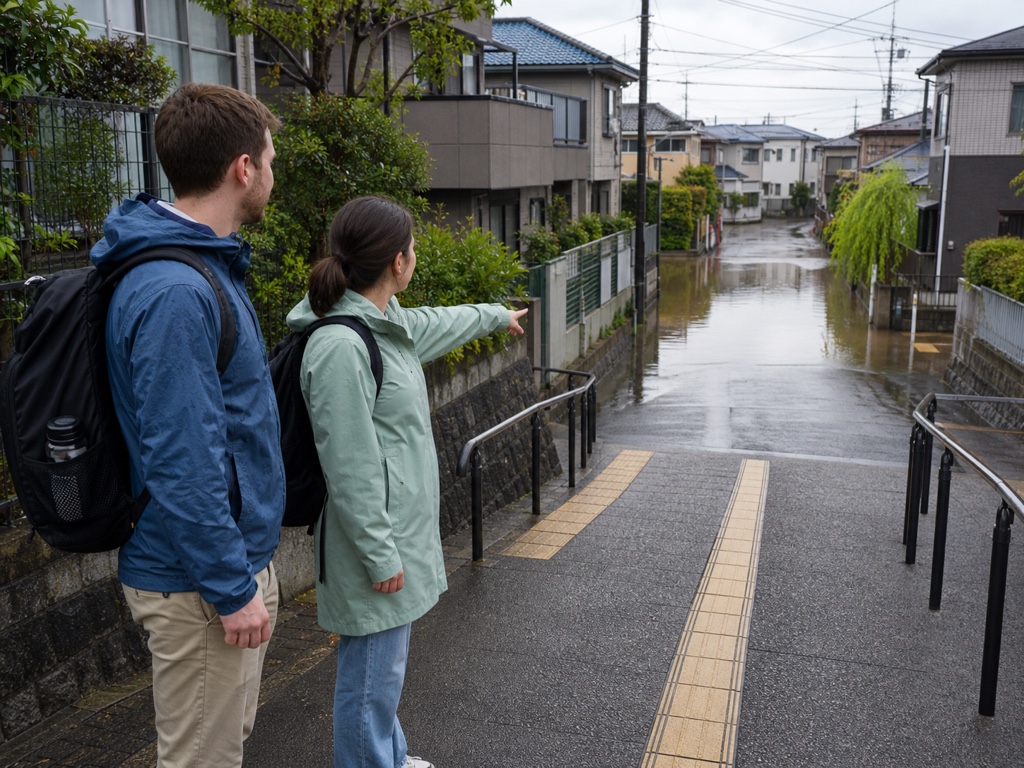
- Cars in floodwater. Water only 30 cm deep can float or stall a car and jam the doors. Never drive into a flooded road or underpass — turn around.
- Walking through water. Moving water above your knees can sweep you off your feet, and you cannot see missing manhole covers, ditches, or debris underneath.
- Underground and basements. Water floods underpasses, basements, and semi-basement flats with frightening speed.
- Landslides. Saturated slopes can collapse — this is why landslide Emergency Warnings matter.
What foreign residents should do
- Watch official forecasts and your city's alerts; charge your phone.
- Know your hazard map and evacuation site in advance.
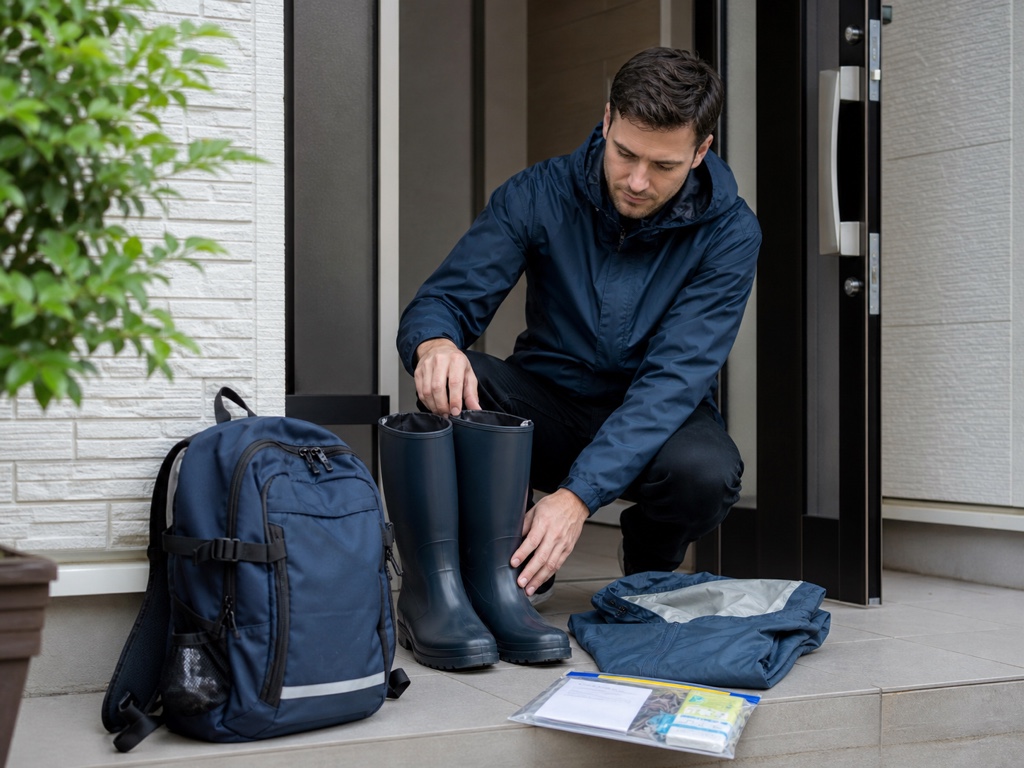
- Move valuables and documents up high; prepare a grab-bag.
- Leave early, on foot, wearing sturdy shoes; avoid rivers, underpasses, and the coast.
- Shelters (hinanjo) are open to everyone, regardless of nationality.
- Never enter floodwater to reach a shelter.
- Do “vertical evacuation”: move to the highest floor, away from the slope side.
- Call for help (119) and signal from a window if trapped.
- Tell family you are safe via the 171 message dial.
How to get official, multilingual updates
- NHK WORLD-JAPAN carries emergency information in English and other languages during major disasters.
- The Japan Meteorological Agency (JMA) issues warnings, rainfall, and river/flood information.
- Your city or town's website and alerts give the most local evacuation instructions; many are multilingual.
- Check flood and landslide risk on the national Hazard Map Portal and your municipal hazard map.
- For emergencies, call 119 (fire & ambulance) or 110 (police); interpretation is available in many areas.
See our Official Resources and Emergency Numbers pages.
What this means for the rest of Japan
Linear rain bands and sudden, extreme downpours are becoming more common across Japan — not just in Chiba. If this news is a wake-up call, take a few minutes this week:
Related reading
About this article
Japan Ready Life summarizes information from official and reputable news sources. We are not a government agency, and this article is not official advice. During an emergency, always follow the latest instructions from the Japan Meteorological Agency and your local authorities. Details of a developing event change quickly — verify current information with official sources.