Emergency Guide for Foreign Residents
Living in Japan as a foreign resident does not change one thing: in an emergency, help is for everyone. This guide explains the language support that exists, how to get alerts you can understand, which documents to keep ready, and how evacuation shelters work — so you can act with confidence when it matters.
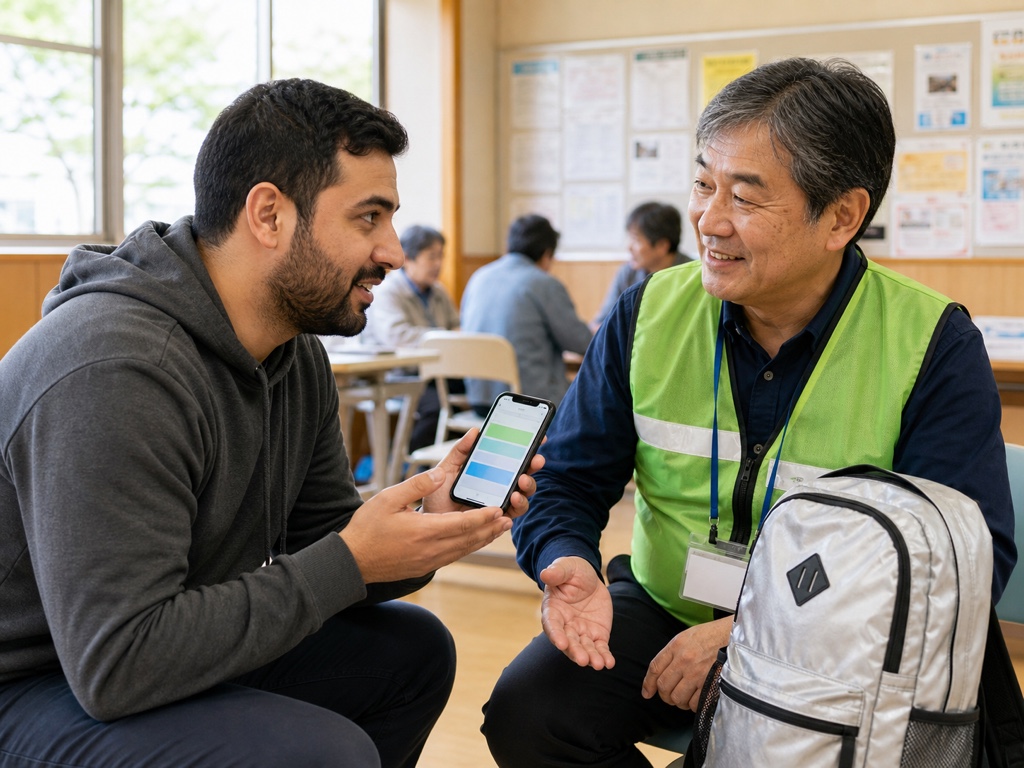
You belong here in an emergency
Emergency services and public evacuation shelters in Japan are for everyone in the area, regardless of nationality or visa status. You do not need to speak Japanese to call for help — language support exists, and this guide shows you how to reach it. Prepare a little now, and you will not have to figure it out under stress.
Overview
Japan faces earthquakes, typhoons, floods, and other hazards, and the systems for warning and helping the public are well developed. As a foreign resident, the main gaps you face are usually about language and unfamiliarity — not about whether help is available to you. The good news is that a lot of multilingual support already exists, and most of the preparation is simple: turn on the right notifications, keep copies of a few documents, and know where your nearest shelter is.
This guide focuses on the parts of preparedness that are specific to being a non-Japanese resident. For the general hazard advice, see our Emergency Guides, and for building your supplies see the emergency kit pages.
Language help
You can call for help even if your Japanese is limited. Here is what is generally available:
- Emergency calls (110 for police, 119 for fire and ambulance): in many areas these services can connect you to interpretation support, often through a three-way call with an interpreter. Speak slowly, say your language if you can, and stay on the line. See emergency numbers for how to make the call.
- Municipal and international associations: most cities and prefectures, and local international/exchange associations, provide disaster information and consultation in several languages. Your city's website and its local app are good starting points.
- National multilingual information: Japan provides multilingual emergency and safety information for the public and for travelers (the idea behind JNTO's "Japan Safety Tips" concept), and public broadcasting such as NHK issues emergency information that is made available in multiple languages.
When you call 110 or 119
Say what is happening, where you are (address or a nearby landmark), and your name. If you cannot explain in Japanese, keep talking in your language and ask for an interpreter — the operator can often arrange one. Carry an Emergency Contact Card with your address written in Japanese so you can read it out or show it.
Alerts & apps
Warnings in Japan can arrive seconds to minutes before danger. Set these up now, while it is calm:
- Enable emergency alerts and earthquake early warning notifications in your phone's settings. These push warnings to phones in the affected area automatically.
- Keep the volume and vibration on so you notice alerts at night.
- Register for your municipality's emergency email or alert service; many offer registration in more than one language.
- Install your city's official app if it has one, plus official multilingual disaster apps.
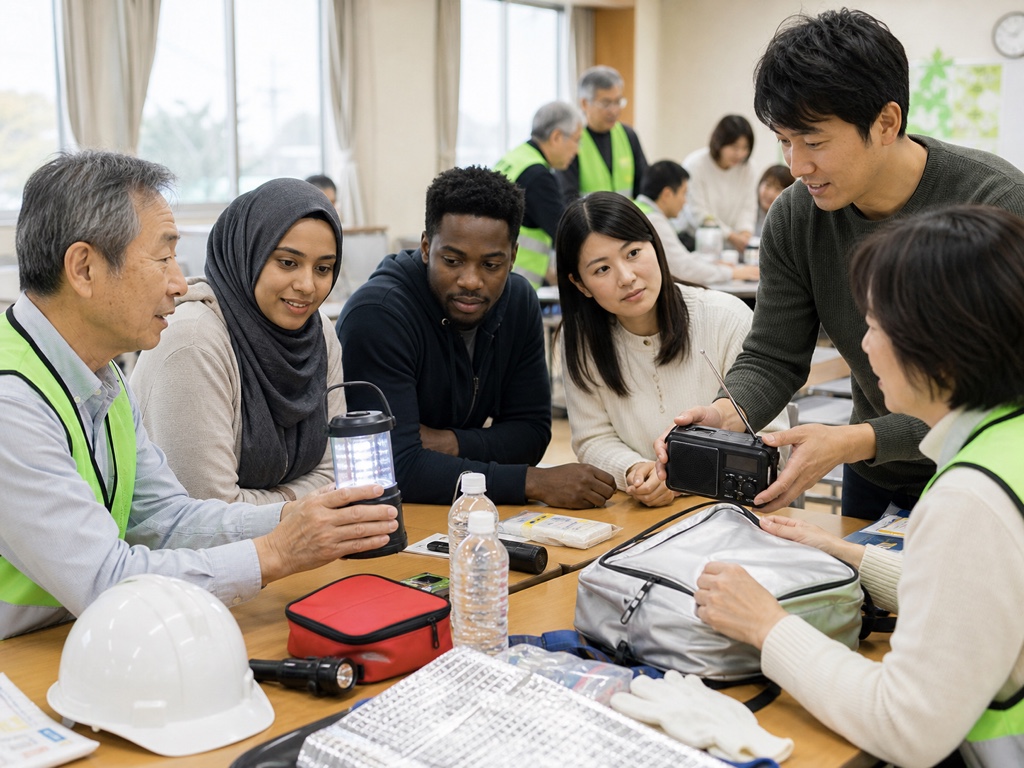
- Keep a battery-powered or hand-crank radio, and a charged power bank.
- Bookmark official resources so you know where to check for trustworthy information.
Because official apps and services change over time, we do not list specific app names here that we cannot keep current — instead, find the ones for your area through our official resources page.
Documents to keep ready
In a disaster you may need to prove who you are, get medical care, or contact people quickly. Keep copies — photos on your phone and printouts in your grab-bag — of:
- Residence card (在留カード) — carry the original as required by law, and keep a copy.
- Passport — the photo/ID page.
- Health insurance card — needed for medical treatment.
- Emergency contacts — family in Japan and abroad, with phone numbers in full international format.
- Your embassy or consulate contact — know how to reach your country's embassy or consulate in Japan; they can help nationals during a major disaster.
Write your home address in Japanese somewhere you can show it, and consider filling in our Emergency Contact Card so all of this is on one page.
Evacuation shelters
When authorities issue an evacuation order or your home becomes unsafe, you go to an evacuation shelter (避難所, hinanjo) — often a nearby school or public hall. Key points for foreign residents:
- Shelters are open to all residents in the area, regardless of nationality or visa status.
- Find your nearest designated shelter now on your city's hazard map, and note a route you can walk.
- Bring your grab-bag, any medication, your document copies, and cash.
- Staff may communicate in Japanese; your Emergency Contact Card and simple phrases (below) help. Ask if multilingual support or signage is available.
Useful Japanese phrases
A few words can make a real difference in an emergency. These are written in romaji (Roman letters) with their meaning:
- Tasukete! (助けて) — Help!
- Kaji! (火事) — Fire!
- Kyukyusha o yonde kudasai (救急車を呼んでください) — Please call an ambulance. (Kyukyusha = ambulance.)
- Jishin (地震) — Earthquake.
- Hinan (避難) — Evacuation / to evacuate.
- Nihongo ga wakarimasen (日本語が分かりません) — I don't understand Japanese.
- Byoin wa doko desu ka? (病院はどこですか) — Where is the hospital?
Before a disaster happens
- Enable emergency and earthquake early warning alerts on your phone, and register for your municipality's alert service.
- Prepare an Emergency Contact Card — this is the single most useful thing you can carry as a foreign resident; it puts your name, address in Japanese, blood type, allergies, and contacts on one page.
- Make a family plan: agree where to meet and how to check in if phones are busy.
- Keep copies of your residence card, passport, and health insurance card in your grab-bag.
- Find your nearest evacuation shelter and walk the route once so it is familiar.
- Learn a handful of phrases (above) and save your embassy's contact details.
- Bookmark official resources and emergency numbers so trustworthy help is one tap away.
Related tools
Frequently asked questions
Can I call 110 or 119 if I don't speak Japanese?
Are evacuation shelters open to foreign residents?
How do I get emergency alerts I can understand?
Which documents should I keep ready?
Disclaimer
This guide is general information, not professional or official advice. Services, apps, and language support vary by area and change over time. During an emergency, always follow the latest instructions from your local government and official sources, and verify safety-critical details before you rely on them.