Kumamoto Earthquake (July 28, 2026): What Foreign Residents Need to Know
A powerful earthquake struck Kumamoto Prefecture on the afternoon of July 28, 2026, reaching the maximum seismic intensity of 7 — just over a decade after the devastating 2016 Kumamoto earthquakes. Here is what is known so far, what to do now, and how to get trustworthy updates in your language.
If you are in or near the affected area
Strong aftershocks are likely for days. Do not go back into damaged buildings. If shaking starts, Drop, Cover, and Hold On. Follow the instructions of your local government and the Japan Meteorological Agency, and check official channels (below) for the latest information.
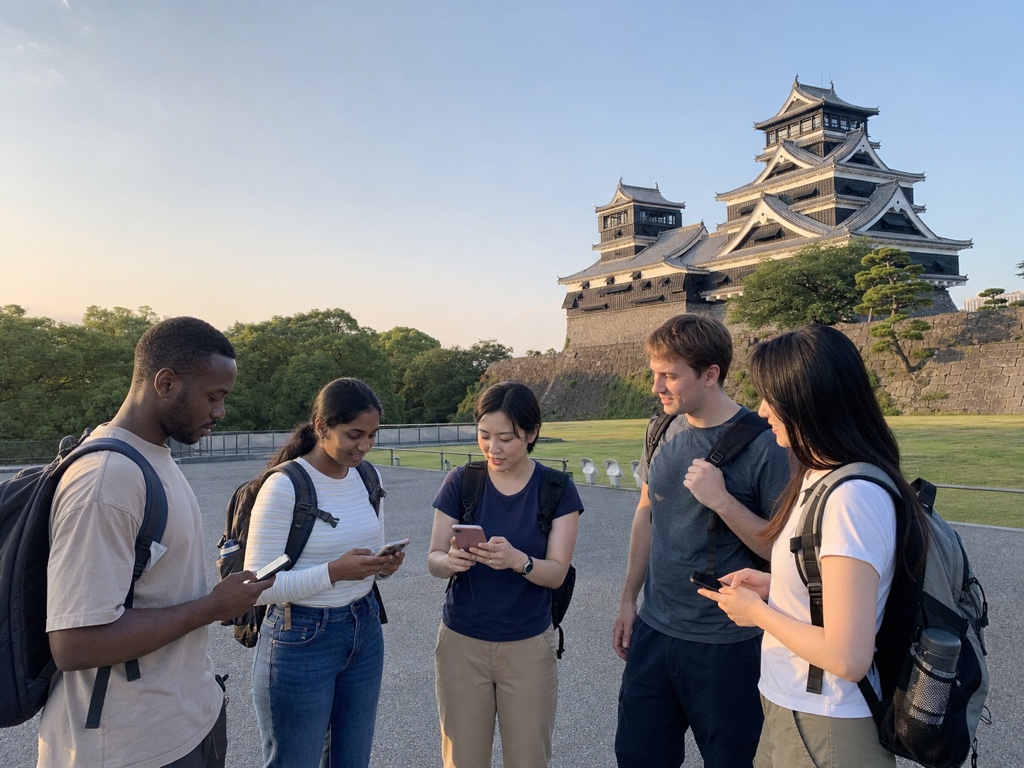
⚠️ This is a developing situation. Figures below are preliminary and were being updated by authorities. Always confirm the latest details with official sources.
What happened
At about 4:27 p.m. JST on July 28, 2026, an earthquake struck the Kumamoto region of Kyushu. The Japan Meteorological Agency (JMA) estimated the magnitude at M7.1, at a shallow depth of roughly 10 km (the U.S. Geological Survey estimated M6.8). Shallow quakes tend to shake the surface more strongly.
The strongest shaking — the maximum seismic intensity 7 (shindo 7) on Japan's 0–7 scale — was recorded in Uki City and Hikawa Town. Intensity 6 (upper/“6-strong”) was reported in areas including Yatsushiro, Uto, Misato, Mashiki, and Kumamoto City's Minami Ward. Emergency Earthquake (Early) Warnings were issued across several Kyushu prefectures, including Kumamoto, Nagasaki, Kagoshima, Fukuoka, Saga, Oita, and Miyazaki.
This was the first quake to register a shindo 7 in Japan since the Noto Peninsula earthquake of January 2024.
Tsunami advisory (now lifted)
Shortly after the quake, a tsunami advisory was issued for the Ariake Sea and Yatsushiro Sea, and coastal residents were told to move away from the shore. That advisory was lifted at about 6:10 p.m. JST. If any new coastal warning is issued during aftershocks, move to higher ground immediately and do not return until it is lifted.
Reported impact (preliminary)
In the first hours, authorities and broadcasters (including NHK) reported:
- Collapsed houses and several fires near the epicentre, including emergency calls about fires in Uki City.
- Damage to transport infrastructure, including the Kyushu Expressway around Yatsushiro and a collapsed pedestrian section of a bridge.
- Around 48,000 households without power (Kyushu Electric), plus injuries being transported to hospital in the worst-hit towns.
- Part of the stone walls of Kumamoto Castle collapsed again — the castle was still being restored from 2016.
- A notable aftershock (around intensity 5) struck the same area roughly 30 minutes later.
The government said human and material damage was still being confirmed. Casualty numbers were preliminary and changing — please rely on official sources for current figures.
A decade after the 2016 Kumamoto earthquakes
Today's quake comes just over ten years after the 2016 Kumamoto earthquakes. In April 2016, the region was hit by two major quakes in quick succession: a magnitude 6.5 “foreshock” on April 14 and a magnitude 7.3 mainshock on April 16 — both reaching seismic intensity 7. That sequence killed 278 people (including disaster-related deaths) and injured around 2,800, damaged tens of thousands of buildings, and severely damaged Kumamoto Castle, whose full restoration is expected to continue until 2052.
One hard lesson from 2016 stands out for everyone in Japan: the later, larger quake can come after the first one. Many people were caught when the April 16 mainshock struck about 28 hours after the initial April 14 quake. This is exactly why authorities warn so strongly about aftershocks — and why you should not re-enter a damaged building.
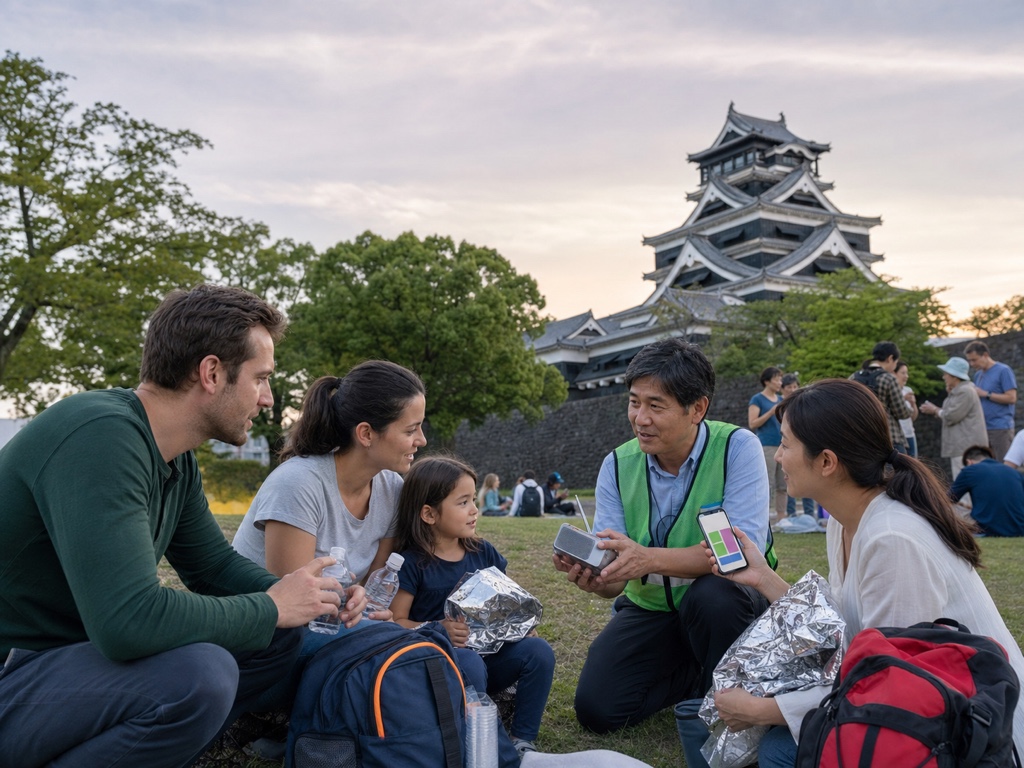
What foreign residents should do now
- Drop, Cover, Hold On; protect your head under a sturdy table.
- Stay away from windows, walls, and tall furniture.
- After shaking, open a door for an exit and check for fire/gas.
- Go to a designated evacuation shelter (hinanjo) — they are open to everyone, regardless of nationality.
- Bring your grab-bag, medication, and copies of your residence card and passport.
- Do not return to a damaged building to collect belongings.
- Tell family you are safe using the 171 disaster message dial or messaging apps.
- Keep your phone charged; save battery.
- Carry the Emergency Contact Card if your Japanese is limited.
How to get official, multilingual updates
- NHK WORLD-JAPAN broadcasts emergency information in English and other languages during major disasters.
- The Japan Meteorological Agency (JMA) publishes earthquake, aftershock, and any tsunami information.
- Your city or town's website and emergency alerts carry the most local, up-to-date instructions; many offer multilingual notices.
- The government's multilingual Safety Tips concept and disaster apps push alerts in several languages.
- For emergencies, call 119 (fire & ambulance) or 110 (police); interpretation support is available in many areas.
See our Official Resources page for direct links, and Emergency Numbers to save the key numbers now.
What this means for the rest of Japan
You do not have to be in Kumamoto for this to matter. Damaging earthquakes can happen almost anywhere in Japan, often without warning. If today's news is a wake-up call, take three small steps this week:
Related reading
About this article
Japan Ready Life summarizes information from official and reputable news sources. We are not a government agency, and this article is not official advice. During an emergency, always follow the latest instructions from the Japan Meteorological Agency and your local authorities. Details of a developing event change quickly — verify current information with official sources.