Earthquake-Proof Your Home: Securing Furniture the Right Way
During a strong earthquake, the biggest danger inside many homes is not the building itself — it is heavy furniture and flying objects. Securing them is the cheapest and most effective preparation you can do.
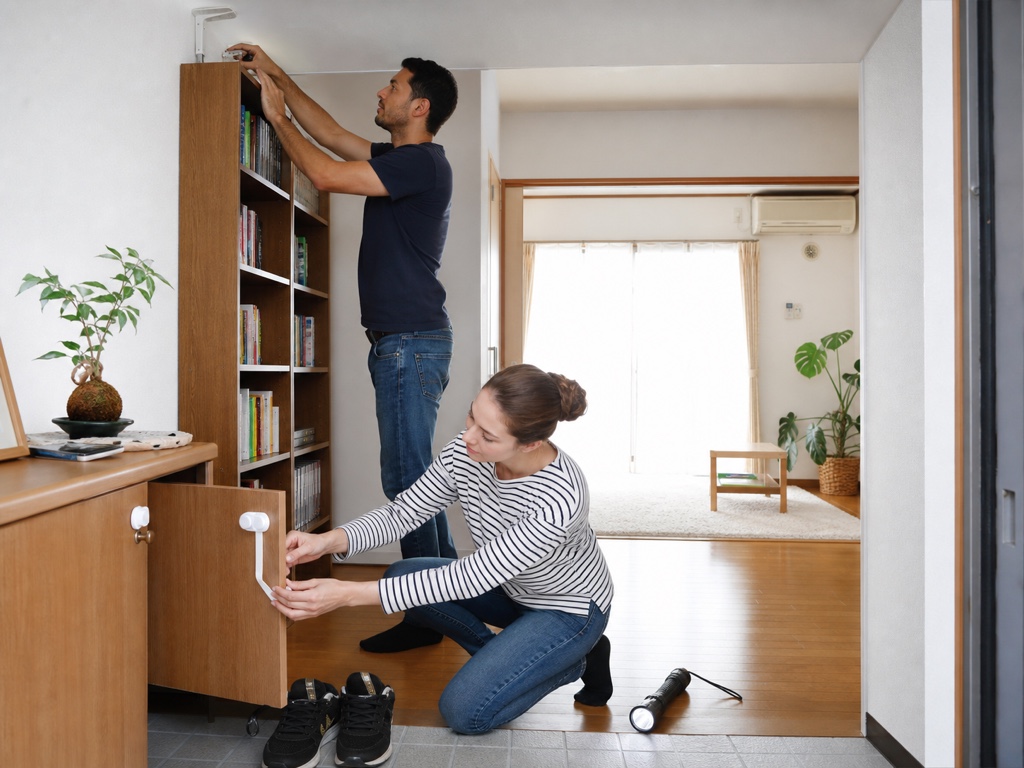
Modern buildings in Japan are designed to resist strong shaking. That means, in many earthquakes, the real risk to your safety comes from inside your own home: tall shelves that tip over, a wardrobe that falls onto a bed, a television that slides off its stand, or dishes and glass flying across the room. The good news is that fixing these problems is simple, affordable, and something you can do in a single afternoon.
Why this matters most
In past earthquakes, a large share of injuries came from falling and toppling furniture and from broken glass — not from buildings collapsing. Securing your furniture protects you in two ways: it stops heavy items from hitting you, and it keeps your escape route clear so you can leave safely. For the small cost of a few brackets or rods, this is the highest-value preparation in your home.
Anchor tall furniture to the wall
The strongest method is to fix furniture directly to the wall using L-shaped metal brackets and screws driven into the wall studs (the solid wooden or metal frame behind the wall). A screw into a stud holds far better than one into a hollow wall panel. Anchor bookcases, wardrobes, tall drawers, and cabinets. If you are unsure where the studs are, a simple stud finder can help.
Renter-friendly, no-damage options
If you rent and cannot drill into the wall, you still have good choices:
- Tension rods (tsuppari-bo): spring-loaded poles that press between the top of the furniture and the ceiling to stop it from tipping forward. Place them toward the back, near the wall.
- Anti-slip mats and wedges: pads placed under the front edge of furniture tilt it slightly backward against the wall, and mats stop it from sliding.
- Adhesive gel pads: sticky pads that hold down televisions, microwaves, and other electronics without screws.
Combining a tension rod with an anti-slip mat gives much better protection than using either one alone.
Stop objects from flying
Once large furniture is anchored, look at the smaller items:
- Fit latches or catches on cupboard and cabinet doors so they do not swing open and spill their contents.
- Secure the television with a strap or gel pads so it cannot fall.
- Apply shatter-resistant film to glass doors, windows, and cabinet fronts to hold broken pieces together.
- Keep heavy or breakable items on low shelves, and store the lightest things up high.
Think about layout and escape
Where you place furniture matters as much as how you fix it. Do not put tall furniture where it could fall onto a bed, a sofa where people sit, or across a doorway or hallway. Always keep a clear path from your sleeping area to the door. If a heavy item must stand near an exit, that is the first thing to anchor.
Start with the room where you sleep. You are most vulnerable when lying down and unaware, so securing the bedroom first gives you the greatest protection for the least effort.
Where to go next
Disclaimer
This article is general information, not official advice. During an emergency, follow the latest instructions from Japanese national and local authorities.