Emergency Kit Guide
A ready-to-grab emergency kit is one of the simplest ways to protect your household in Japan. This guide explains what to pack, how much, and why — written in clear English for foreign residents.
Think in two bags
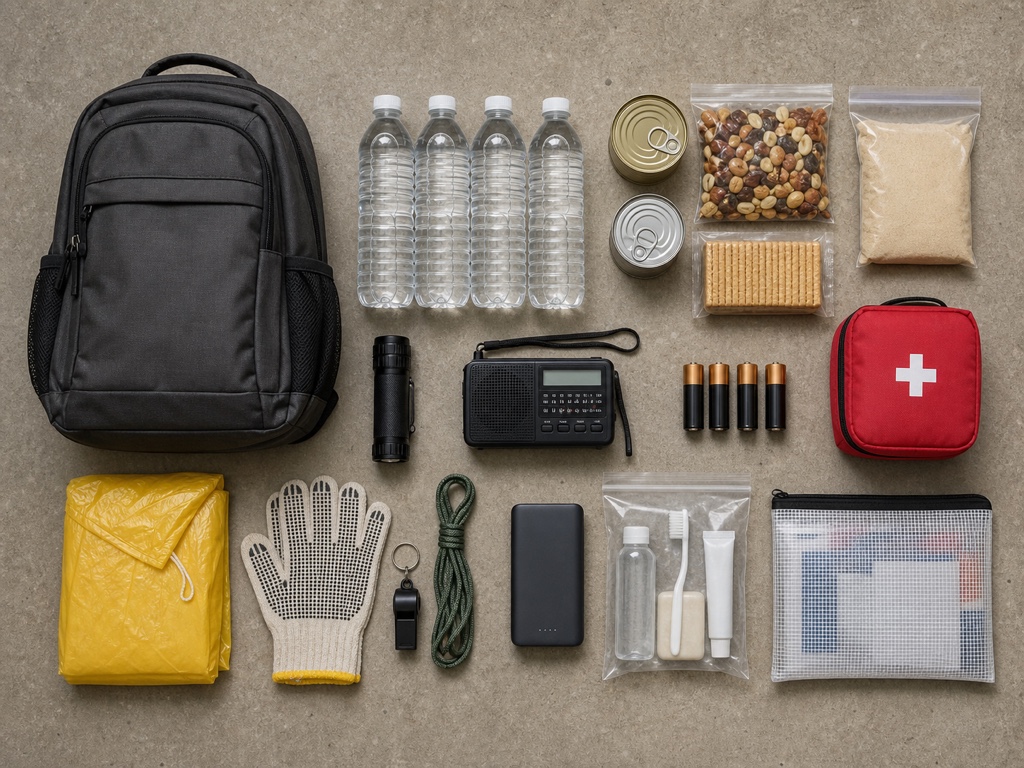
Emergency supplies in Japan usually come in two parts. A grab-bag (hijo mochidashi bukuro) is a light backpack you carry when you evacuate — it holds only what you need for the first day or so. A home stockpile (bichiku) is a larger supply of water, food, and essentials kept at home for staying put after a disaster. Prepare both: one to take, one to stay.
Overview
After a major earthquake, typhoon, or flood, help and shops may be unavailable for several days. A prepared household can stay safe, comfortable, and independent while services recover. You do not need to buy everything at once — start with water and light, then build up over time.
The key idea is the two-bag concept. Your grab-bag is portable and evacuation-ready. Your home stockpile is larger and supports you if you shelter in place. Check both twice a year — for example when the clocks or seasons change — and replace anything expired.
The grab-bag (hijo mochidashi bukuro)
This is what you grab and carry the moment you evacuate. Keep it near your front door or bedroom, in a backpack so your hands stay free. Pack for the first day: light, warm, and small enough to run with. Test the weight — you should be able to carry it comfortably.
- Drinking water (a few small bottles) and some ready-to-eat food.
- Flashlight or headlamp, plus a power bank for your phone.
- Portable radio for official information.
- First aid items and any personal medicine.
- Mask, gloves, and a whistle to signal for help.
- Rain poncho and an emergency blanket for warmth.
- Copies of your residence card, passport, and insurance card.
- Some cash in small notes and coins.
- An Emergency Contact Card in case you need language help.
The home stockpile (bichiku)
This larger supply keeps you going if you stay at home after the emergency. A common guideline is to store 3 litres of water per person per day for at least 3 days, ideally 7 days, plus food that keeps without refrigeration. Use the rolling stock method: buy a little extra of what you normally eat, use the oldest first, and top up — so nothing goes to waste.
- Bottled water: 3 L per person per day, 3–7 days.
- Non-perishable food: canned goods, retort pouches, dry noodles, rice.
- A camping stove or cassette gas burner with spare fuel.
- Extra batteries, a larger power bank, and candles with a safe holder.
- Lanterns for lighting a room, not just a beam.
- A portable toilet and plenty of plastic bags (water may be cut off).
- Wet wipes, toilet paper, and rubbish bags.
- Blankets, spare clothes, and seasonal items for heat or cold.
What to pack by category
Use these categories as a checklist. Not every item is essential for everyone — adjust for your household, home, and climate.
- Water: 3 L per person per day for 3–7 days; small bottles for the grab-bag.
- Food: ready-to-eat and non-perishable items you actually like; a manual can opener.
- Light & power: flashlight or headlamp, lantern, spare batteries, power bank, charging cables.
- Communication & radio: a battery or hand-crank radio, a written list of key phone numbers, and note the 171 disaster message dial.
- First aid & medicine: a first aid kit, prescription medicine with a copy of the prescription, and any personal medical items.
- Hygiene & portable toilet: a portable toilet with bags, wet wipes, toilet paper, hand sanitiser, and feminine hygiene products.
- Documents & cash: copies of your residence card, passport, and insurance card; cash in small denominations.
- Clothing & warmth: spare clothes, sturdy shoes, gloves, a rain poncho, and an emergency blanket.
- Tools: a multi-tool, work gloves, duct tape, a whistle, and a marker pen.
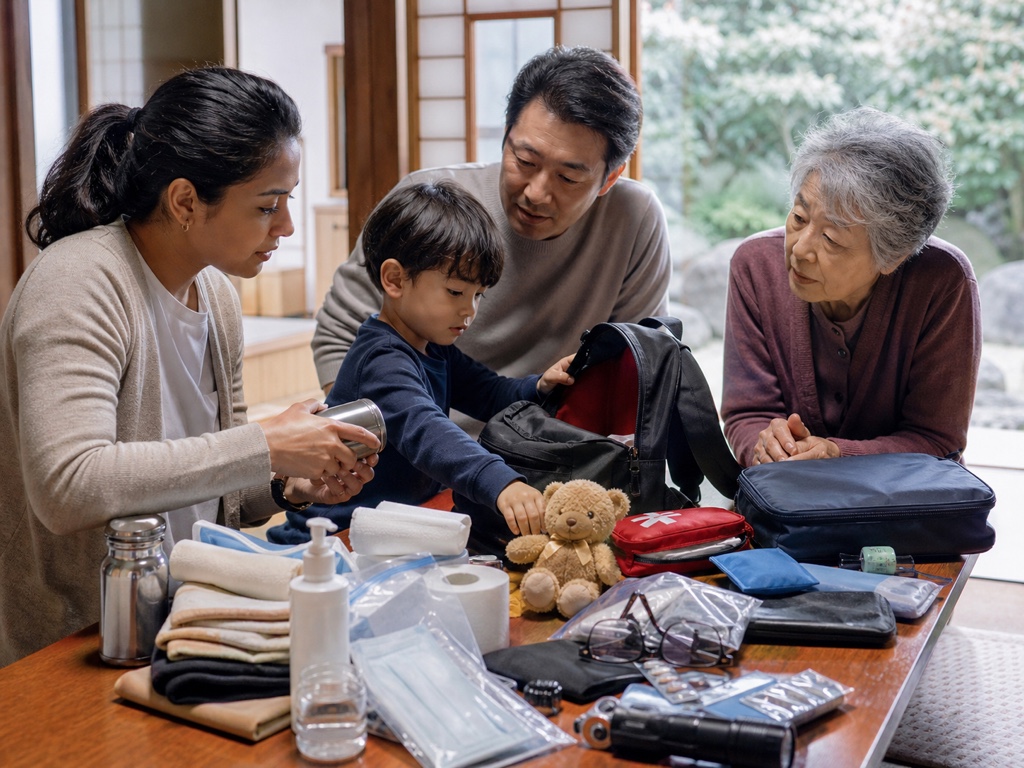
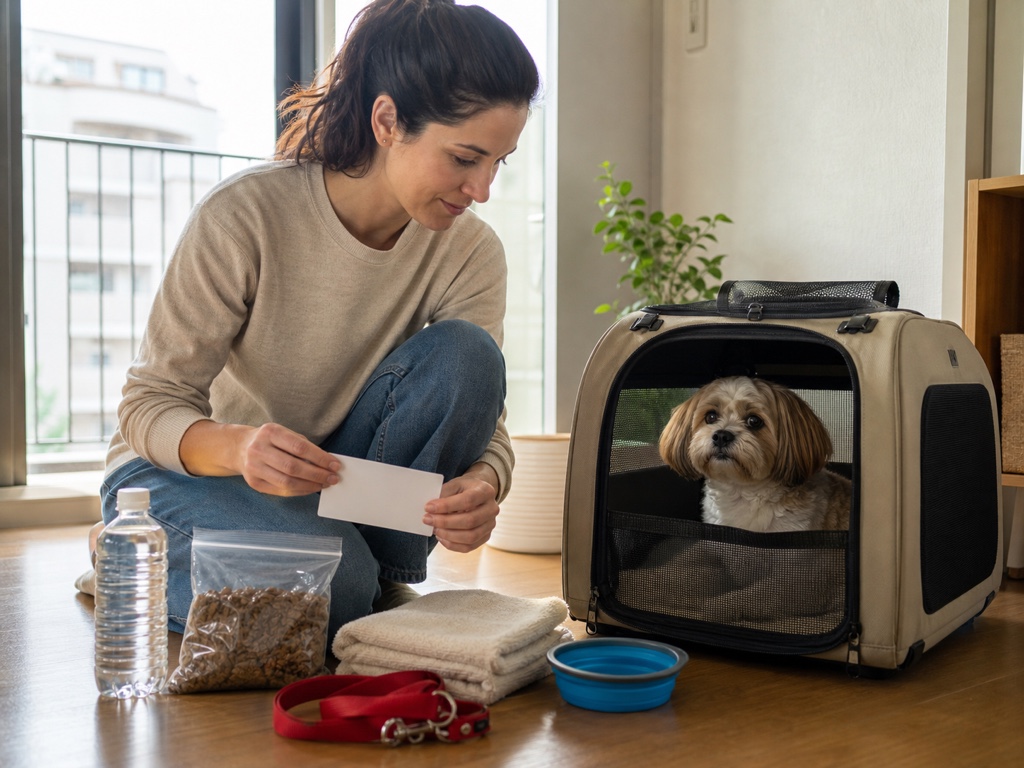
Then add extras for the people and animals in your care:
- Formula, baby food, nappies, and wet wipes.
- A familiar toy or comfort item to reduce stress.
- Extra medication, glasses, and any assistive devices.
- A written note of conditions, allergies, and medicines.
- Pet food, water, and a carrier or lead.
- Vaccination records and any regular medication.
Advice for foreign residents
- Keep copies of your residence card, passport, and insurance card in your grab-bag.
- Prepare an Emergency Contact Card so you can communicate needs and allergies without translating on the spot.
- Register for your municipality's emergency alerts; many offer multilingual services.
- Learn the words bichiku (stockpile), hijo mochidashi bukuro (grab-bag), and hinanjo (evacuation shelter).
- Public evacuation shelters are open to everyone in the area, including foreign residents — bring your grab-bag and any medication you need.
Recommended supplies
Useful categories to look for. These are search links, not specific endorsements.
This page may contain affiliate links. As an Amazon Associate we may earn from qualifying purchases. Prices and availability vary; check the linked page.
Related tools
Frequently asked questions
What is the difference between a grab-bag and a home stockpile?
How much water and food should I store?
Where should I keep my emergency kit?
How do I keep supplies from expiring?
Disclaimer
This guide is general information, not professional or official advice. During an emergency, always follow the latest instructions from your local government and official agencies. Verify safety-critical details with official sources.