Family Evacuation Planning: Routes, Roles, and Bringing Everyone
A good household evacuation plan turns panic into action. When everyone knows where to go, who does what, and how to stay in touch, you can leave quickly and calmly — pets included.
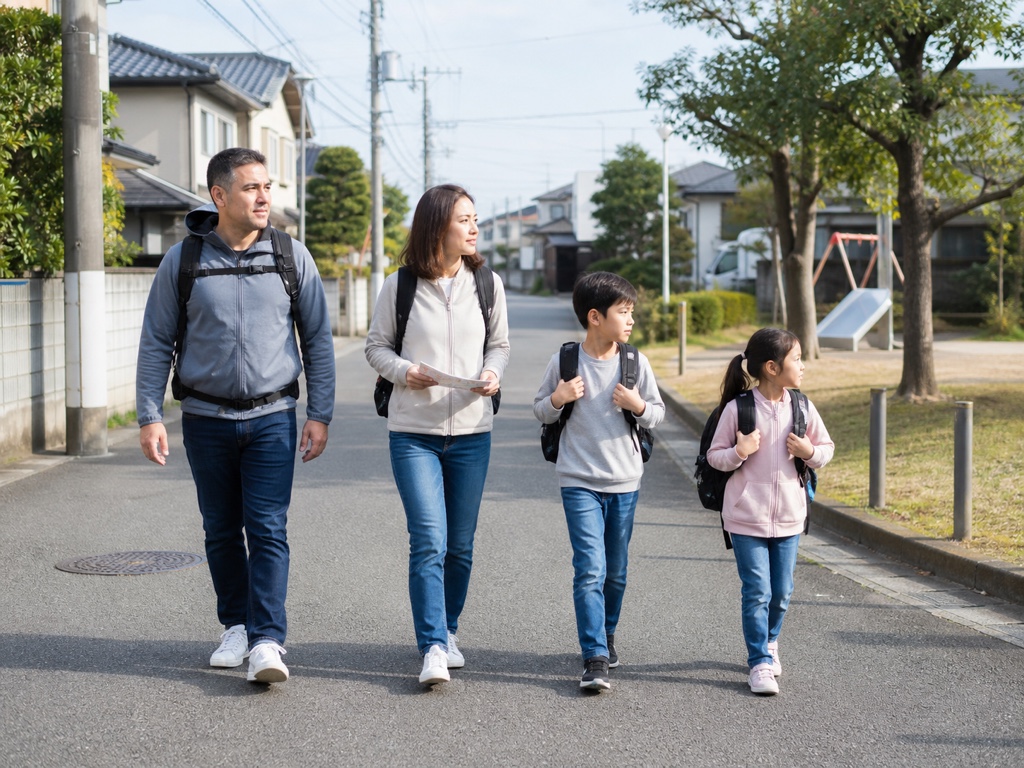
In an emergency, the families who cope best are usually the ones who decided what to do in advance. You do not need a complicated document — just a clear, shared plan that every member of the household understands. Here is how to build one, step by step.
1. Find your evacuation site and a safe route
Start with your local hazard map. Identify the nearest designated evacuation site (hinanjo) and a backup in a different direction, in case one is unreachable. Then choose the safest walking route to each — one that avoids rivers, underpasses, and steep slopes, which become dangerous during floods and heavy rain. Our guide to reading hazard maps explains how to spot these risks.
2. Choose meeting points
Pick a primary meeting point near your home, and a backup outside your immediate neighbourhood. If family members are apart when disaster strikes — at work, school, or the shops — everyone knows where to head. The backup point matters in case your own street is blocked or unsafe.
3. Assign roles
Decide in advance who does what so nobody freezes. For example: one person grabs the emergency bag by the door, another helps young children or an elderly family member, and someone is responsible for the pet carrier. When each person has a clear job, you leave faster and forget less.
4. Understand Japan's warning levels
Japan uses a five-level warning system for storms and floods. The key rule to remember: you should evacuate by Level 4 (evacuation order) — do not wait for Level 5, which means a disaster may already be happening. If you have members who need more time to move, leave earlier. Our family plan tool can help you record these decisions.
5. Evacuate together — including pets
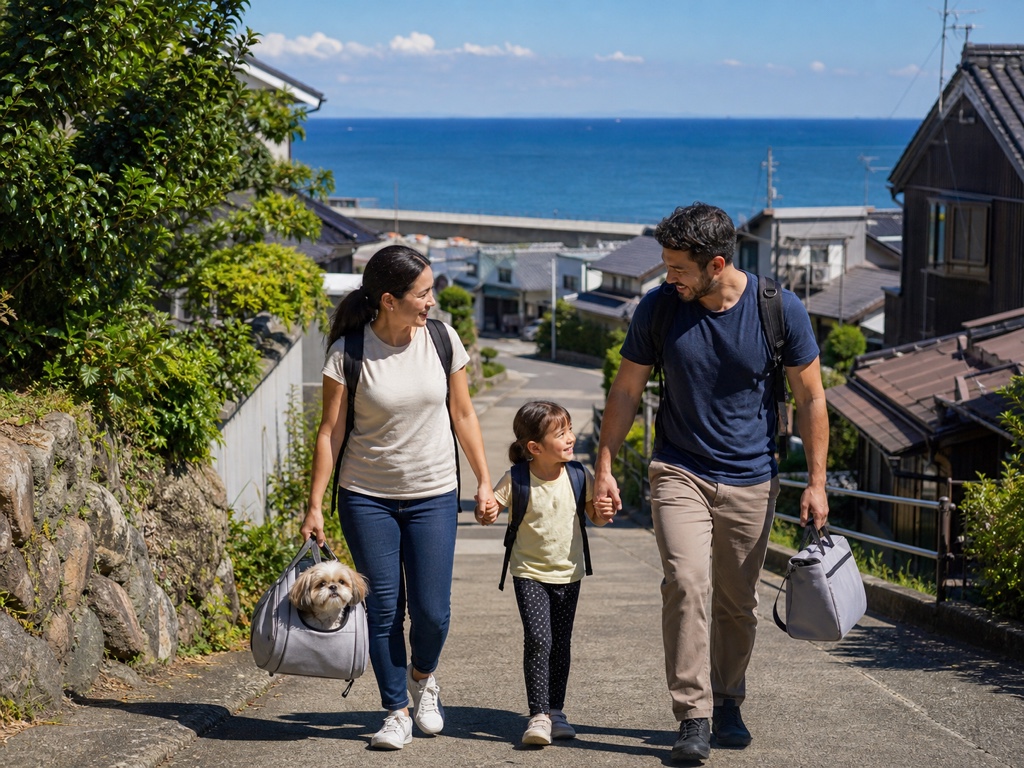
Japan generally encourages taking your pets with you when you evacuate, an approach known as dōbō hinan ("evacuating together"). Leaving animals behind is stressful and can be dangerous for them and for you. Prepare a carrier, a leash, food, and any medication in advance. Because shelter rules for animals vary by municipality, confirm which nearby shelters accept pets before an emergency, and note a backup option.
6. Agree how to communicate
Phone lines are often overloaded after a major disaster. Japan offers the 171 disaster message dial, where you can leave and listen to short voice messages. Also choose one contact who lives outside your region; it is often easier for separated family members to reach a distant relative than each other, and that person can relay everyone's status.
7. Walk the route — then review
A plan on paper is not the same as a plan your family has practised. Walk the route together at least once, ideally in daylight. Then imagine doing it in darkness or heavy rain — Is it well lit? Could that path flood? Talk through it. Review and update the whole plan every six months, since children grow, neighbours change, and shelters can be updated.
Public evacuation shelters and the 171 message dial are for everyone in Japan, regardless of nationality or language. Foreign residents have every right to use them — see our foreign residents guide for language help.
Where to go next
Disclaimer
This article is general information, not official advice. During an emergency, follow the latest instructions from Japanese national and local authorities.