Food Storage Guide
After a disaster in Japan, shops can sell out and deliveries can stop for days. Keeping a small food stockpile at home means you and your family can eat normally while services recover. This guide shows you what to store and how to keep it fresh — written for foreign residents.
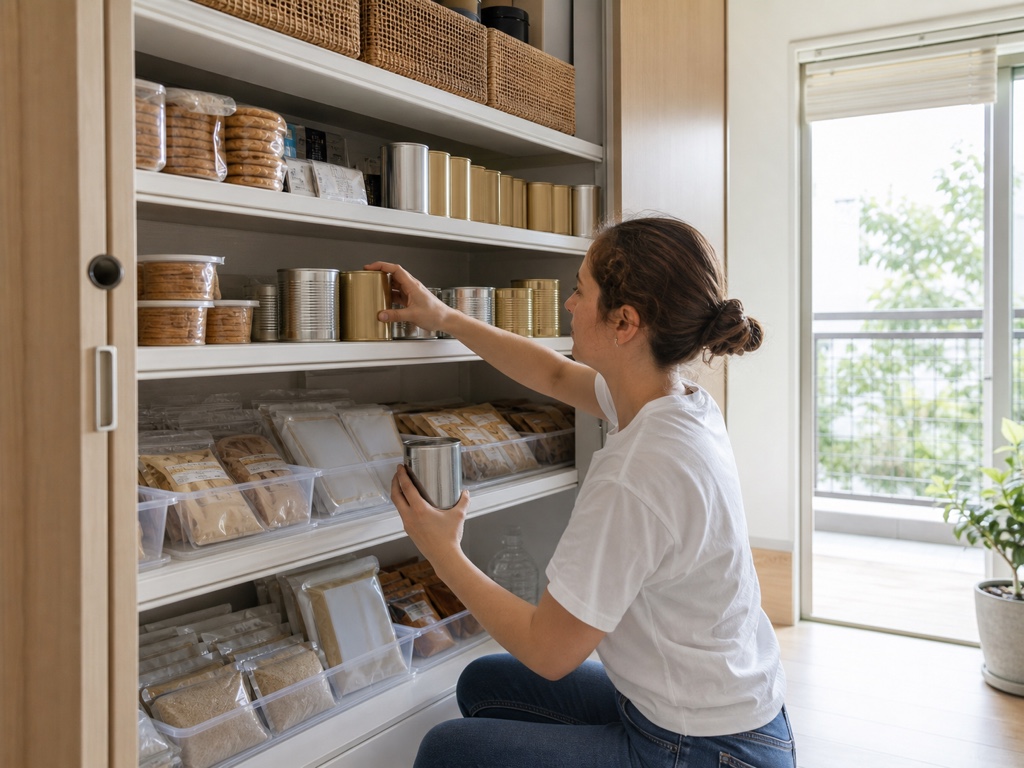
The easiest way to build a stockpile: "rolling stock"
Rolling stock (rōringu sutokku) means you buy a little extra of the food you already eat every day, use the oldest items first, and replenish what you use. Your stockpile keeps rotating, so nothing expires unused and your emergency food is food you actually like. It is far easier to sustain than buying special "disaster food" that sits in a cupboard for years.
Overview
A home food stockpile is one of the simplest and most useful preparations you can make. In the days after a major earthquake or typhoon, supermarkets and convenience stores may be closed or emptied, and it can take time for supply chains to recover. Having food already at home removes one big worry so you can focus on staying safe.
The goal is not to build a survival bunker. It is to keep enough ordinary food on hand that your household can eat comfortably for several days without shopping. The rolling stock method makes this easy to maintain because you are simply keeping a slightly larger buffer of everyday food.
How much to store
Aim for at least 3 days of food per person, and ideally 7 days. A larger stock is helpful if you live in an area that can be cut off after a disaster, or if your household includes children, older people, or anyone with special dietary needs.
- Count meals per person: roughly 3 meals a day, so 3 days is about 9 meals and 7 days is about 21 meals per person.
- Remember to store food for pets and any baby formula or baby food you need.
- Store food that needs little or no water to prepare — water may be limited, so save it for drinking.
To get exact numbers for your household, use our Food Calculator — it estimates how many portions of each category you should keep based on the number of people and the number of days you want to cover.
What to store
Build your stockpile from a few simple categories so meals stay balanced and varied. Choose foods your household actually eats.
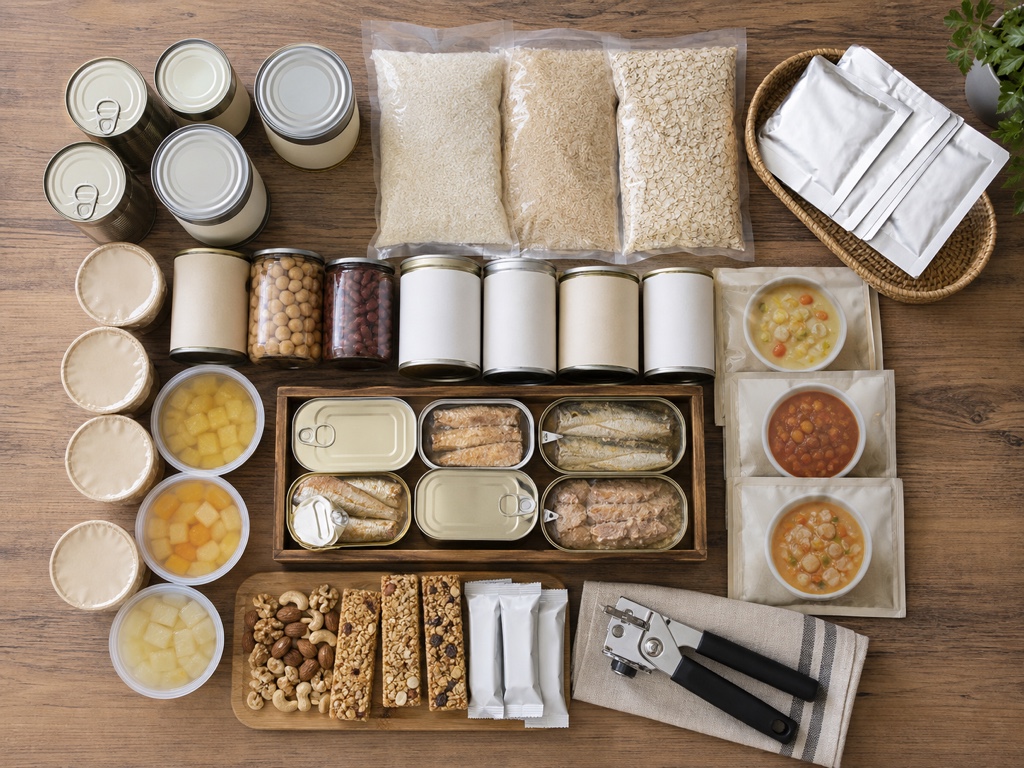
- Rice, including alpha-rice (pre-cooked dried rice that rehydrates with water).
- Dried and instant noodles, pasta, and packaged bread.
- Filling carbohydrates that store well and are easy to prepare.
- Canned fish and canned meat (tuna, mackerel, chicken).
- Beans — canned or in retort pouches.
- Protein keeps meals satisfying and supports energy over several days.
- Retort-pouch meals such as curry, rice bowls, and soups.
- Foods you can eat cold or with only a quick warm-up.
- These save fuel and water when cooking is difficult.
- Energy bars, biscuits, crackers, and dried fruit or nuts.
- Chocolate and other treats to keep morale up, especially for children.
- Snacks need no preparation and are easy to eat on the move.
Check expiry dates regularly. Whenever you add to your stockpile, note the dates and plan to eat the oldest items first (see the rolling stock method below). A quick check every few months keeps everything fresh.
The rolling stock method
Rolling stock turns your everyday pantry into your emergency stockpile, so it stays fresh without extra effort.
- When you shop for food you normally eat, buy a bit more than usual.
- Keep a slightly larger buffer of shelf-stable items in your cupboard.
- Eat from the front of the shelf — the items closest to their expiry date.
- Place newer purchases at the back so stock rotates naturally.
- Replace what you use on your next shopping trip.
- Your stockpile stays topped up, fresh, and full of food you like.
Cooking without power
After a disaster, electricity and gas may be off. A little planning lets you still prepare hot food and drinks.
Cassette gas stove
A portable cassette gas stove (kasetto konro) with spare gas canisters lets you boil water and heat meals when the power is out. Keep several canisters in stock and check their condition. Always use it in a well-ventilated space and never leave it unattended.
- Keep a manual can opener — many canned foods still need one, and electric openers will not work.
- Prefer foods that need little or no water to prepare, so you can save your stored water for drinking.
- Alpha-rice and retort meals can be prepared with only hot (or even cold) water, making them ideal when fuel and water are scarce.
- Keep disposable plates, bowls, cutlery, and plastic wrap so you can eat without washing up when water is limited.
Advice for foreign residents
- Plan for dietary and allergy needs — read ingredient labels in advance and stock foods that are safe for everyone in your household.
- If you eat halal, vegetarian, or vegan, build your stockpile from products you have already checked; do not assume emergency supplies at a shelter will match your needs.
- Learn to recognise the Japanese words for common allergens and for the expiry markings shōmikigen (best-before) and shōhikigen (use-by) on packaging.
- Stock familiar comfort foods from home if you can — they make a stressful situation easier for the whole family.
- Keep some cash for buying food once shops reopen, as card readers and ATMs may not work.
Related tools
Frequently asked questions
How many days of food should I store?
What is the rolling stock method?
How do I cook if the power and gas are off?
What if I have allergies or eat halal or vegetarian?
Disclaimer
This guide is general information, not professional or official advice. During an emergency, always follow the latest instructions from your local government. Verify safety-critical details with official sources.