Preparing Your Pet for a Disaster in Japan
Your pet depends on you, and a disaster is frightening for animals too. A little planning now means you can keep your companion safe and calm when it matters most.
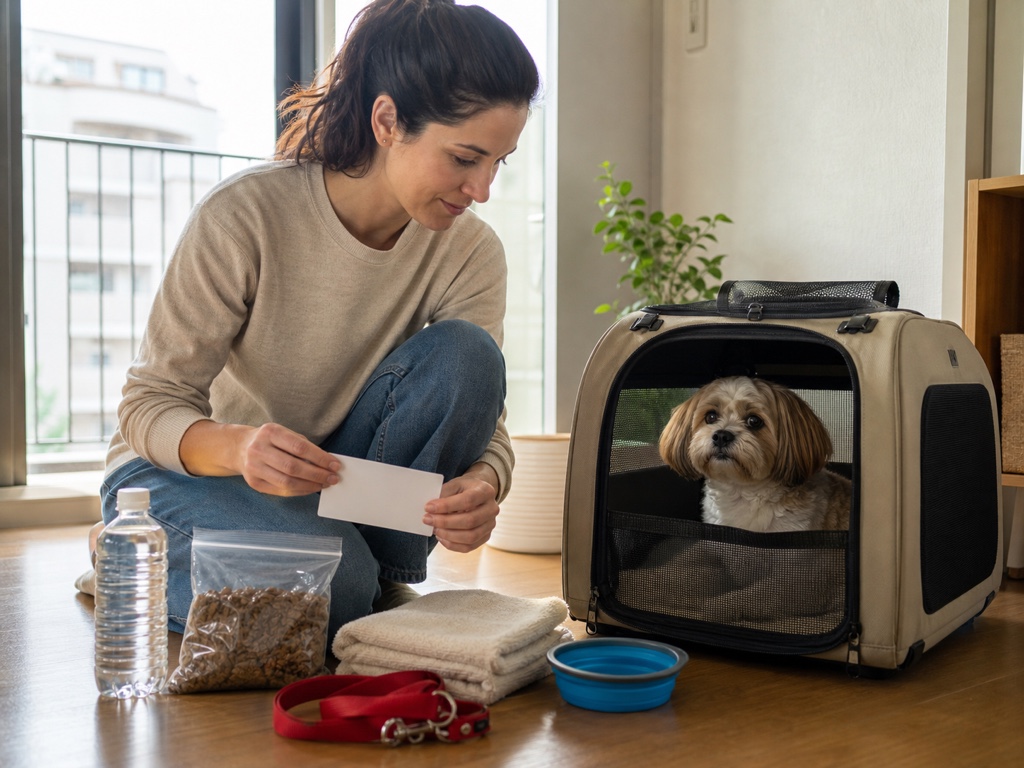
Pets are part of the family, and they need a place in your disaster plan. In Japan, the general guidance is that owners should evacuate together with their animals — this idea is often called dobo hinan (evacuating with your pet). Planning ahead makes this possible and far less stressful for both of you.
Plan to evacuate together
The safest place for your pet is with you. Leaving an animal behind during a flood or earthquake puts it at serious risk, and returning later can be dangerous or impossible. Because of this, the recommended approach is to take your pet with you when you evacuate. To do that smoothly, you need to prepare a kit, get your pet used to a carrier, and know where you can go — all before an emergency happens.
Build a pet emergency kit
Keep a dedicated bag for your pet, stored near your own grab-bag. Include several days of food and water, plus a bowl. Pack a sturdy carrier or crate, a leash and harness, and waste bags or a litter tray. Add any medication your pet takes, along with a copy of its vaccination records. Include a recent photo of you together, which helps prove ownership and makes it easier to search if you are separated. A familiar blanket or toy can also help keep your pet calm.
Crate-train ahead of time
At a shelter, your pet will usually need to stay in a carrier or crate for long periods. An animal that has never used one may panic. Well before any emergency, help your pet get comfortable: leave the carrier open at home, add a soft blanket, and let your pet rest inside so it becomes a safe, familiar space rather than something scary. A calm, crate-trained animal is much easier to move and care for during a disaster.
Check which shelters accept pets
This is the most important step to do in advance. Rules for pets at evacuation shelters are decided locally and differ from one municipality to another. Some shelters accept pets in designated areas, some require carriers, and some may not accept animals at all. Do not assume — check with your own city or ward office now, and note the nearest shelter that welcomes pets. It also helps to have a backup, such as a friend's home in another area or a pet-friendly hotel.
Shelter pet rules vary widely by area and can change. Always confirm the current policy with your local government before you rely on it.
Use ID and a microchip
If you and your pet become separated, identification gives you the best chance of a reunion. Make sure your pet wears a collar with an ID tag, and keep its microchip registration up to date with your current contact details. Keeping a recent photo of your pet on your phone and on paper is a simple extra safeguard.
Keep your pet calm
Animals sense stress and can react to loud noises, shaking, and crowds. Speak gently, keep your pet close, and bring a familiar item that smells of home. Staying as calm as you can yourself helps your pet feel safe. Once you have a plan, add your pet to your household emergency plan so everyone knows who is responsible for the animal — our family plan tool makes this easy.
Where to go next
Disclaimer
This article is general information, not official advice. During an emergency, follow the latest instructions from Japanese national and local authorities.