Living High: Disaster Prep for High-Rise Apartments in Japan
Tall Japanese apartment buildings are built to survive earthquakes — but life on an upper floor brings its own risks. Here is how to prepare for living high.
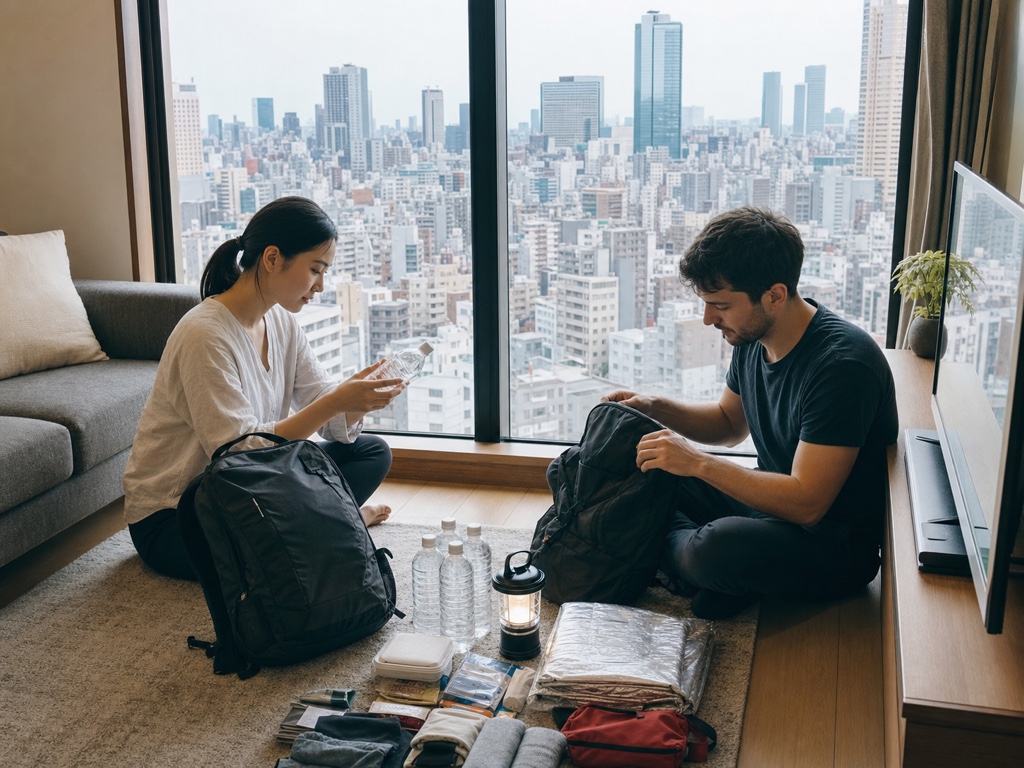
High-rise apartments are popular in Japanese cities, and they are engineered to be very earthquake-resistant. The building itself is unlikely to collapse. But living far above the ground changes how an earthquake feels, and it changes what you need to prepare for. If your home is on an upper floor, this guide is for you.
Why tall buildings sway so much
During a large, distant earthquake, tall buildings can experience "long-period ground motion" (choshuki jishindo). This slow, rolling movement matches the natural sway of a high-rise, so the upper floors can swing slowly and widely — sometimes for several minutes. The Japan Meteorological Agency (JMA) issues long-period ground motion information alongside earthquake reports.
This sway is usually not a danger to the structure, but it is a danger inside your home. Unsecured furniture can topple, and anything on wheels — office chairs, storage carts, pianos — can roll across the room and injure someone or block your exit.
Plan for "in-home evacuation"
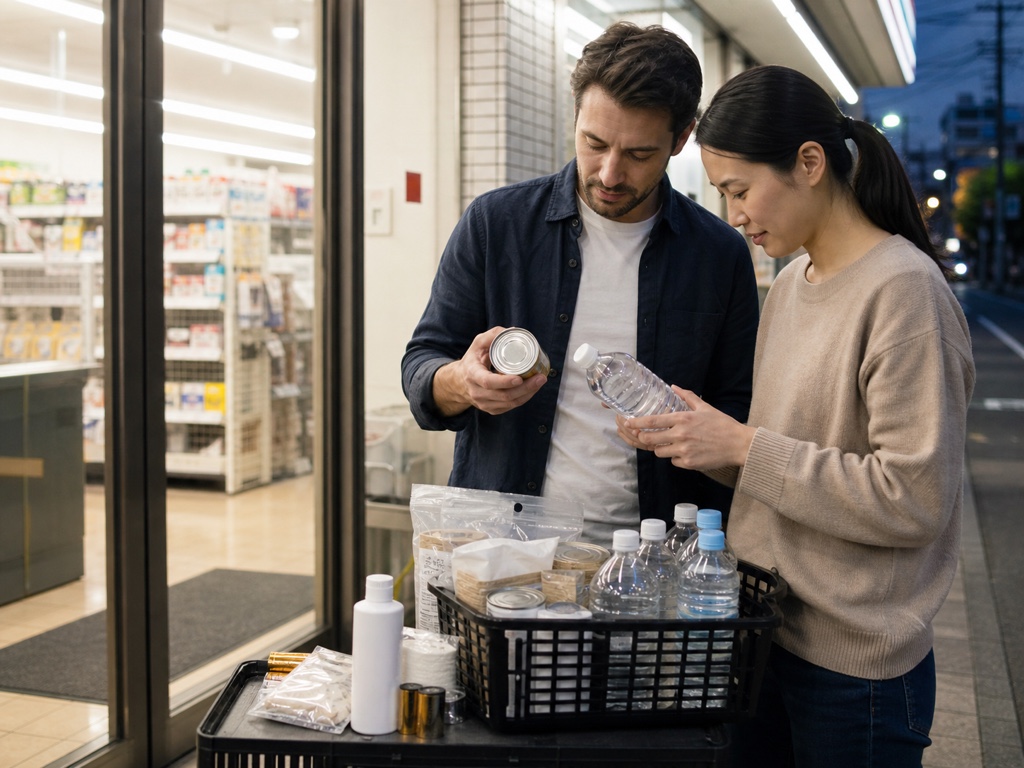
Because your building is likely to stay standing, the recommended plan for a high-rise is in-home evacuation (zaitaku hinan): stay in your own unit rather than going to a crowded shelter. This makes sense for a practical reason too — after a quake the elevators stop, and carrying heavy water and supplies up many flights of stairs is very hard. It is far easier to store what you need at home in advance.
Keep extra water, food, a portable toilet, and light so you can stay comfortably in your unit for several days. A portable toilet matters especially on upper floors, because the building's plumbing may be unusable after a quake.
Two utilities often fail even when the building is fine: elevators stop automatically, leaving only the stairs, and water pumps can fail, so upper floors lose water pressure. Stocking water at home solves both problems at once.
Secure your home before it shakes
Most injuries in a high-rise come from moving objects, so preparation focuses on stopping things from flying around:
- Anchor tall furniture and appliances to the wall so they cannot topple during long, wide sway. See our guide to securing furniture.
- Lock the caster wheels on anything that rolls, or place it against a wall.
- Keep an emergency light and a pair of shoes by the door so you can move safely over broken glass if the power is out.
- Store your home supplies where you can reach them easily. Our emergency kit checklist helps you track everything.
If you are in an elevator
If an earthquake starts while you are in an elevator, press the buttons for every floor and get off at the first floor where the doors open. Modern elevators are designed to stop at the nearest floor, but pressing all the buttons gives you the best chance to get out quickly instead of being trapped between floors.
Where to go next
Disclaimer
This article is general information, not official advice. During an emergency, follow the latest instructions from Japanese national and local authorities.