Caught Away from Home: Earthquake Safety at Work or on the Train
Most earthquake advice assumes you are at home. But a big quake can strike while you are commuting, at the office, or out on the street. Here is how to stay safe wherever you are.
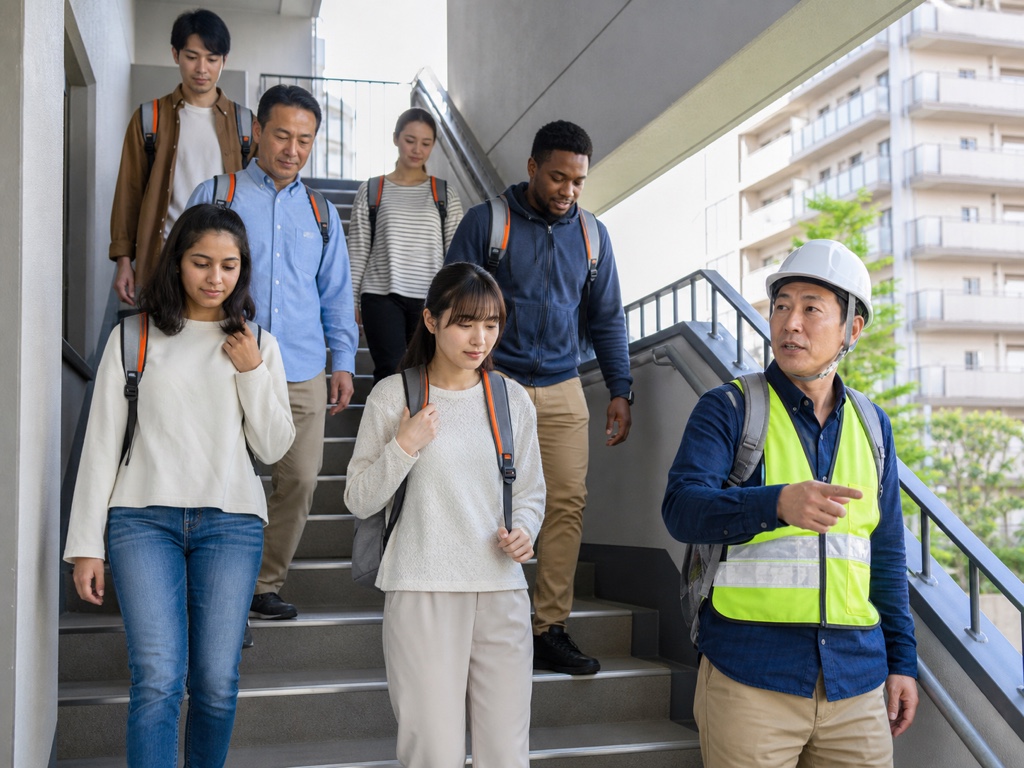
You cannot choose when an earthquake happens, so it helps to have a plan for the places you spend your day. The basic rule everywhere is the same: protect your head, stay away from things that can fall or shatter, and do not rush. Here is what that looks like in different situations.
On a train
Trains are built to withstand strong shaking, and drivers stop them safely when a quake is detected. If you are seated, hold your bag or arm over your head. If you are standing, hold firmly onto a strap or pole with both hands and lower your body a little to keep your balance. Do not try to force the doors open or jump out — the space outside the train can be far more dangerous than inside. Stay calm and follow the announcements and instructions from station and train staff.
In a station or underground
Underground stations are generally safe structures. Move away from pillars, signs, and anything glass, and hold on to a rail or wall. If the power fails, emergency lighting will usually come on. Do not push toward the exits in a crowd. Wait for staff to guide you, and follow the marked evacuation routes calmly when told to move.
In a high-rise office
Tall buildings in Japan are designed to sway rather than break, so the shaking can feel long and large. Immediately drop, cover, and hold on: get under a sturdy desk, hold a leg of it, and protect your head and neck. Stay well away from windows, bookshelves, filing cabinets, and anything that can topple. When the shaking stops, do not use the elevators — they may stop between floors. Use the stairs only if you are instructed to evacuate, and follow your building's emergency staff.
On the street
Outdoors, the danger is falling objects. Protect your head with your bag, a jacket, or your arms, and move away from anything that could fall on you: glass windows, signboards, walls, utility poles, and vending machines. Head for open space if there is any nearby. Watch for broken glass and debris on the ground as you move.
If you are driving
Ease off the accelerator and slow down gradually — do not brake hard. Pull over to the left side of the road, stop, and turn off the engine. Stay in the car with your seatbelt on until the shaking stops and you can judge the situation. If you must leave the car, keep the key in it and leave it unlocked so it can be moved, and take your important belongings with you.
Stranded commuters (kitaku konnan)
After a large earthquake in a big city, trains and buses often stop for a long time. Huge numbers of people may try to walk home at once, which can crowd roads and slow down emergency vehicles. This situation is known in Japan as kitaku konnan — difficulty returning home. Official advice is often that it is safer to stay where you are for a while rather than start a long walk immediately. Wait for transport to restart and for reliable information, and check that roads are safe before moving.
Because you may have to stay at work or wait somewhere for hours, keep a small kit at your desk or in your bag: comfortable shoes, a little water and food, a power bank, a flashlight, and any medication you need. A printed emergency contact card helps others reach the right people if you cannot explain in Japanese.
Where to go next
Disclaimer
This article is general information, not official advice. During an emergency, follow the latest instructions from Japanese national and local authorities.