A Car Emergency Kit for Japan (and What to Do If Disaster Strikes While Driving)
Your car can be a real asset in a disaster — shelter, a phone charger, and a way to move — but only if it is ready. Here is what to keep in it, and what to do if a big earthquake or tsunami hits while you are on the road.
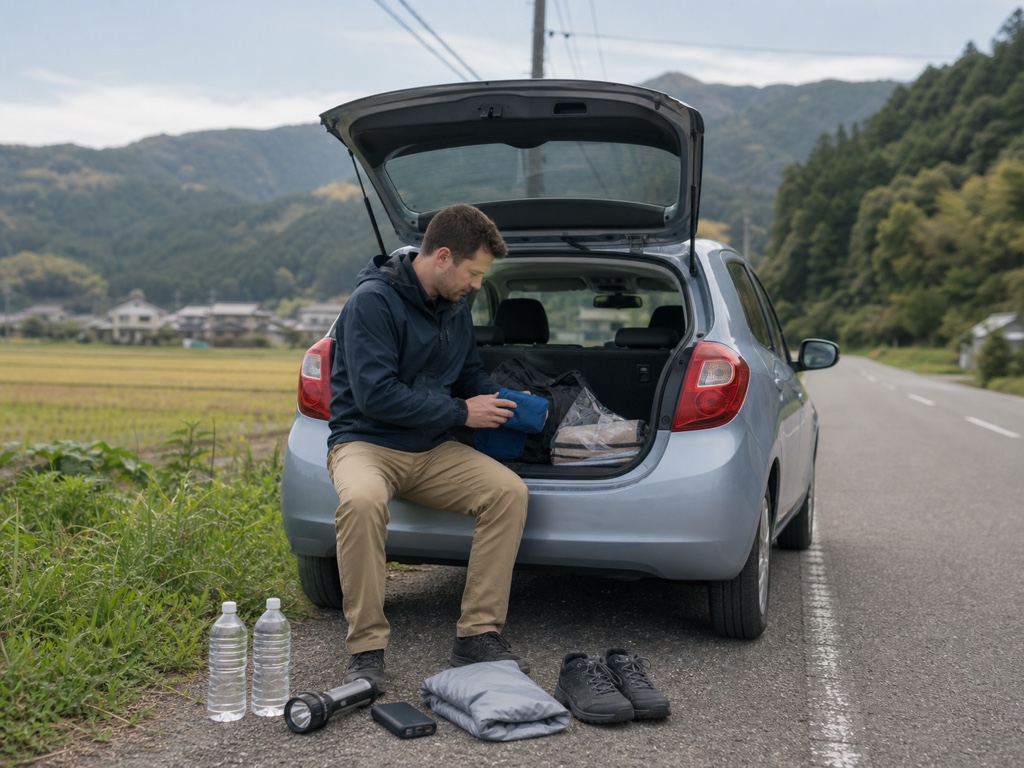
In Japan, a car is more than transport. In a disaster it can be a place to shelter from cold or rain, a way to charge your phone, and — sometimes — a way to reach safety. But a car only helps if it is prepared. That means keeping a dedicated emergency kit inside it, and knowing how to react if a major earthquake or tsunami strikes while you are driving.
What to keep in your car
Build a small kit that lives in your car all year, so you are never caught empty-handed. A good basic set includes:
- Drinking water and some snacks that keep well
- A blanket and an emergency (foil) blanket
- A flashlight, and a phone charger or power bank
- A first-aid kit and work gloves
- A tow rope and jumper cables
- A window-breaker and seatbelt-cutter tool, kept within easy reach
- A paper map (in case your phone or signal fails) and some cash
One simple habit matters as much as any item: keep your fuel tank at least half full. After a big disaster, fuel stations may be closed or have long lines for days, and a half-full tank gives you heat, phone charging, and the option to move.
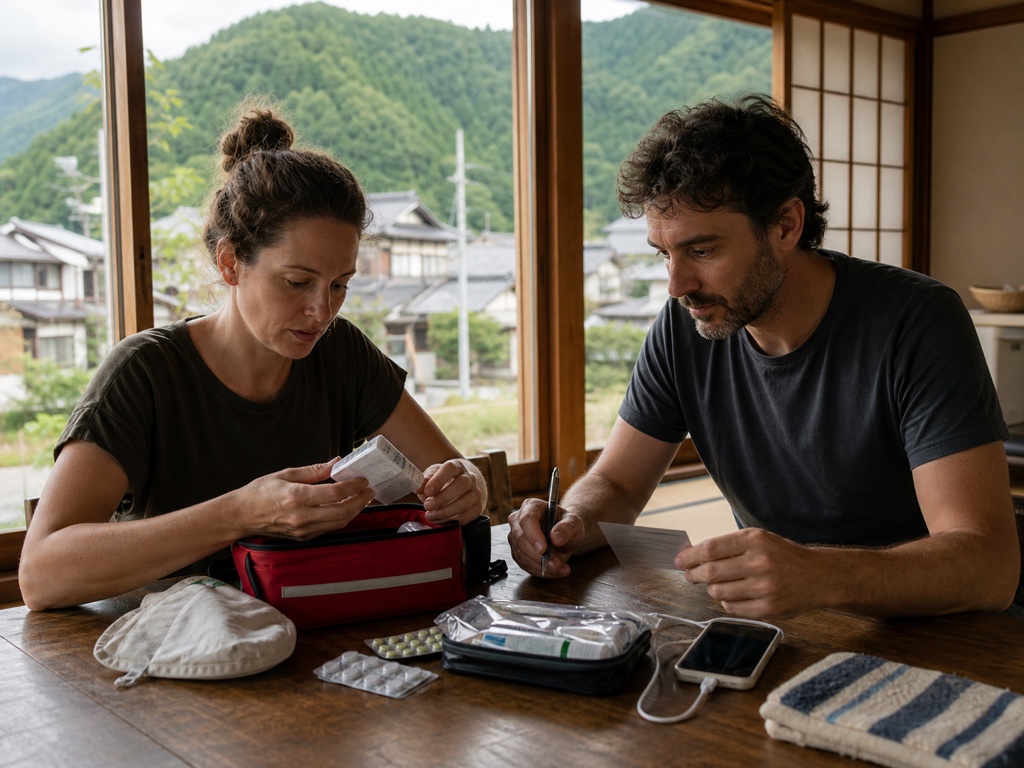
Extra needs for winter and remote areas
If you drive in the countryside, in the mountains, or in snowy regions, add more to your kit. In winter, carry a shovel, snow chains, and warm clothing — being stuck on a blocked road can quickly become dangerous. If anyone in your household relies on regular medication or medical supplies, keep a small reserve in the car too. In remote areas, help and pharmacies can be far away, so a little extra preparation gives you real breathing room until roads reopen.
If a big earthquake hits while you are driving
A strong quake makes a car hard to control, and other drivers may panic. Stay calm and act step by step: reduce your speed gradually — do not brake hard — and pull over to the left side of the road. Stop the car, turn on your hazard lights, and wait. Keep the radio on to follow official information.
If you must leave the car and evacuate on foot, leave it unlocked with the key inside, and take your valuables and documents with you. This lets emergency crews move your car if it is blocking a road for fire trucks or ambulances.
Tsunami warning near the coast: if you are driving near the sea when a strong quake or tsunami warning comes, do not try to escape by car. Roads jam quickly and can become death traps. Abandon the car and evacuate on foot to high ground as fast as you can.
Winter danger: carbon monoxide
If your car gets stuck in snow, there is a hidden risk: carbon-monoxide poisoning. If snow buries the exhaust pipe, deadly gas can build up inside the car while the engine runs. Do not idle the engine to stay warm. Instead, clear the snow around the tailpipe first, and only run the engine briefly with a window cracked open. When in doubt, rely on blankets and warm clothing rather than the heater.
Where to go next
Disclaimer
This article is general information, not official advice. During an emergency, follow the latest instructions from Japanese national and local authorities.