Water Outage Guide for Japan
A water outage (dansui) can happen after an earthquake, a burst pipe, planned maintenance, or a typhoon. Tap water may stop for hours or several days. A little preparation makes a long outage manageable. This guide is written for foreign residents.
Key advice
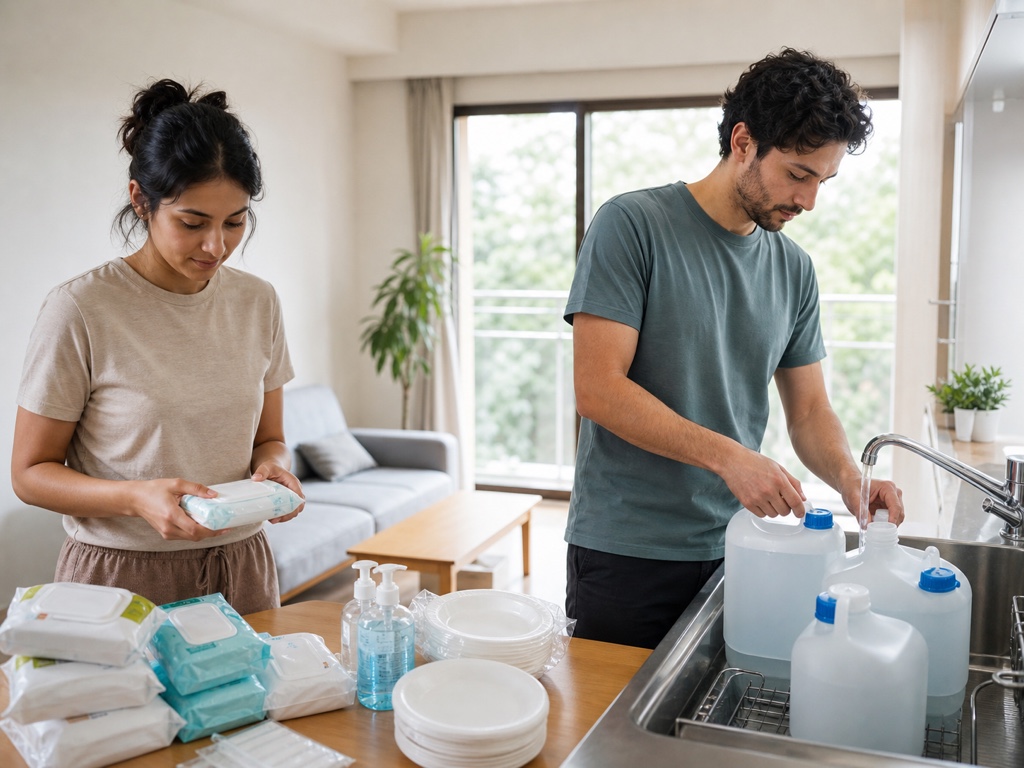
Store water before you need it — you cannot buy it once an outage starts. Portable toilets are essential when water is cut, because you often cannot flush safely. If an outage is expected (a typhoon or planned work), fill the bathtub so you have water for cleaning and flushing.
Overview
A water outage means the tap water supply is interrupted. It may be planned (announced maintenance or pipe work) or sudden (an earthquake, a broken water main, or storm damage). During an outage you lose water for drinking, cooking, washing, and flushing the toilet all at once, so it helps to plan for each of these separately.
The two most useful habits are simple: keep a supply of drinking water stored at home, and keep a way to use the toilet without running water. When an outage is announced in advance, you also have time to fill containers and the bathtub before the water stops.
Before: how to prepare
- Keep about 3 litres per person per day of drinking water for at least 3 days.
- Rotate bottled water so it stays within its best-before date.
- Store it in a cool, dark place away from direct sunlight.
- Keep separate water for flushing and cleaning — it does not need to be drinkable.
- Clean, refillable containers or tanks work well for this.
- Keep some clean containers empty and ready to carry water from a distribution point.
- Keep portable or emergency toilets and plenty of toilet paper.
- Stock wet wipes and hand sanitiser for hygiene without running water.
- Note your local water bureau's contact and how outages are announced.
During: cope with the outage
- Use your stored drinking water; save it for drinking and cooking first.
- Choose meals that need little or no water to prepare.
- Keep track of how much you have left so it lasts the outage.
- Use a portable or emergency toilet instead of flushing.
- Do not flush with too little water — it can cause a blockage.
- Use wet wipes and hand sanitiser to keep hands and surfaces clean.
- Go to a city water distribution point (kyusui) with clean containers.
- Check the local water bureau for updates on when supply will return.
- Follow official announcements for boil-water notices or usage advice.
After: what to do next
- Run the cold tap for a short while so any cloudy or discoloured water clears.
- Follow the water bureau's advice before drinking, if a notice was issued.
- Check taps and pipes for leaks, especially after an earthquake.
- Refill and replace the drinking water you used.
- Replace used portable toilets, wipes, and sanitiser.
- Clean and dry the containers you used to carry water.
- Do not flush until you know the drainage pipes are undamaged.
- Report suspected pipe damage to your water bureau or building manager.
- Keep using portable toilets until flushing is confirmed safe.
Toilets without water
When water is cut, portable or emergency toilets are the safest option. Do not flush with insufficient water, and do not flush when pipes may be damaged after an earthquake — a blockage or a broken pipe can make the problem much worse. If you filled the bathtub in advance, that water can help with flushing only once you are sure the drainage is intact.
Common mistakes
- Waiting until an outage starts to buy water — shops sell out quickly.
- Not preparing a toilet solution, which becomes urgent within hours.
- Flushing with a bucket of water when pipes may be damaged after an earthquake.
- Forgetting to keep empty containers to carry water from a distribution point.
- Assuming the water you have will last — measure it with our calculator.
Advice for foreign residents
- Register for your municipality's emergency alerts; many offer multilingual services.
- Keep an Emergency Contact Card in case you need language assistance.
- Learn the words dansui (water outage), kyusui (water distribution), and suidō (water supply).
- Find your city's water bureau website, where outage notices are usually posted.
- Water distribution points are open to everyone in the area, including foreign residents.
Related tools
Frequently asked questions
How much water should I store for a water outage?
Can I still use the toilet during a water outage?
Where can I get water when the supply is cut?
Is the water safe to drink as soon as it comes back?
Disclaimer
This guide is general information, not professional or official advice. During an emergency, always follow the latest instructions from your local water bureau and government. Verify safety-critical details with official sources.