Typhoon Guide for Japan
Typhoons hit Japan almost every year, mostly between summer and autumn. Unlike earthquakes, they can be forecast days in advance — so the time you spend preparing before landfall makes the biggest difference to your safety. This guide is written for foreign residents.
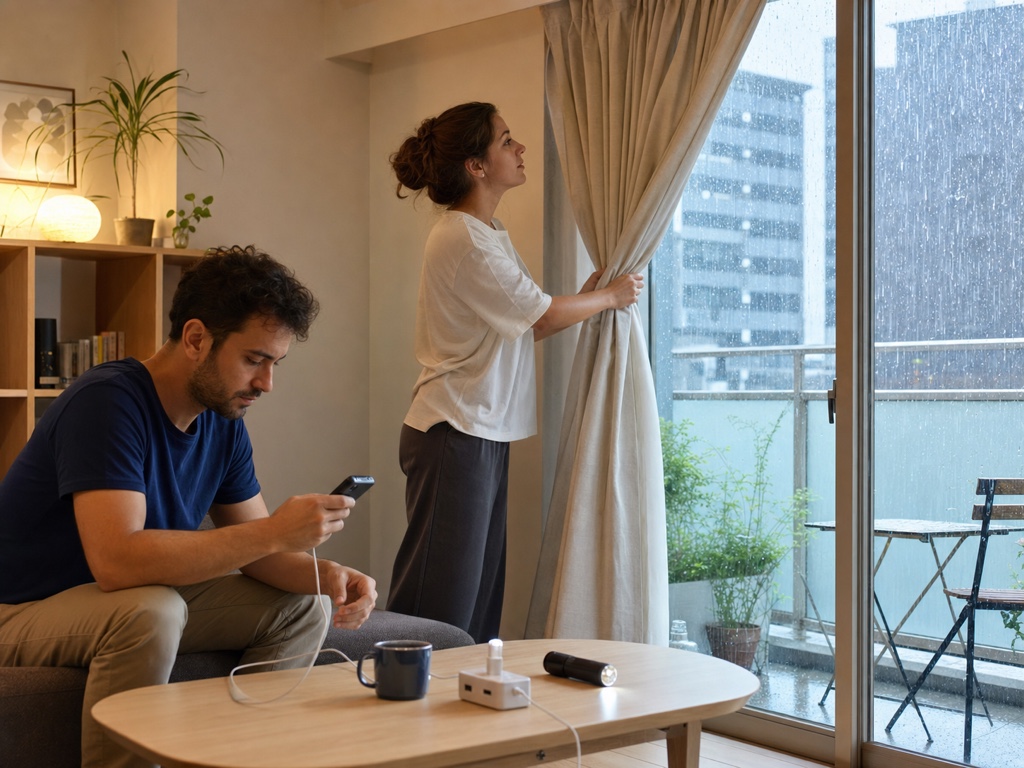
When the typhoon is close
Stay indoors and away from windows. Do not go outside to check the weather, the coast, or a river. Most typhoon injuries and deaths happen to people who go outside during or just before the storm. If local authorities issue evacuation information, move early — before wind and flooding make it dangerous.
Overview
A typhoon is a powerful tropical storm that brings strong winds, heavy rain, high waves, and storm surge. In Japan the biggest dangers are usually not the wind alone but the water it brings: river flooding, flash floods in low areas and underpasses, and landslides on slopes. Because typhoons are tracked and forecast in advance, you will often have one to several days of warning to get ready.
Japan uses a 5-level warning system that tells residents how urgent the situation is and what action to take, from getting ready to evacuating immediately. The Japan Meteorological Agency (JMA) issues advisories and warnings, and your local government issues evacuation information for your area. Pay attention to both, and act on the higher level when they differ.
Before: how to prepare
- Bring in or tie down anything on your balcony or garden — plant pots, bikes, laundry poles, and furniture can become dangerous in high wind.
- Close storm shutters if you have them; otherwise consider taping windows and keep curtains closed to contain broken glass.
- Clear drains and gutters so heavy rain can flow away from your home.
- Charge your phone and power banks fully, and store water and food for at least 3 days.
- Pack a grab-bag: light, radio, power bank, first aid, medication, and copies of documents.
- Fill a bottle or bathtub with water and keep some cash — power and card readers may fail.
- Check your city's hazard map for flood and landslide risk near your home.
- Find your nearest evacuation site and how to reach it on foot.
- Follow the JMA forecast and your local government's evacuation information, and decide early when you would leave.
During: stay safe
- Stay inside and keep away from windows and glass doors.
- Move to a room on a higher floor or away from the windward side if wind becomes violent.
- Do not go outside to inspect damage or take photos while the storm is passing.
- Stay away from rivers, canals, the coast, and underpasses that can flood in minutes.
- Never walk or drive through flood water — you cannot judge its depth or current.
- On or near slopes, watch for signs of landslides and move away if you notice them.
- Move early, before wind and water make roads dangerous.
- If it is already too dangerous to leave, move to the highest and strongest part of your building.
- Follow instructions from local authorities and take your grab-bag.
After: what to do next
- Check yourself and others for injuries before moving around.
- Stay indoors until authorities confirm the danger has passed — wind can stay strong.
- Watch out for broken glass, fallen power lines, and unstable structures.
- Flooding and landslides can happen after the rain stops, as ground and rivers stay saturated.
- Keep away from swollen rivers and damaged slopes for a while.
- Do not touch wet electrical outlets or appliances.
- Listen to the radio or check official sources for updates and further warnings.
- Report hazards and follow guidance from your local government.
- Photograph any damage to your home for insurance later.

Common mistakes
- Going outside to "check" the sea, a river, or storm damage while the typhoon is near.
- Waiting until the wind and rain are severe before deciding to evacuate.
- Walking or driving through flooded roads and underpasses.
- Leaving balcony items and laundry poles out where wind can throw them.
- Assuming a "small" typhoon is harmless — even weak storms cause deadly flooding and landslides.
Advice for foreign residents
- Register for your municipality's emergency alerts; many offer multilingual services.
- Prepare an Emergency Contact Card in case you need language assistance.
- Keep copies of your residence card, passport, and insurance card in your grab-bag.
- Learn the words taifu (typhoon), oame (heavy rain), and hinan (evacuation).
- Know that evacuation shelters (hinanjo) are open to everyone, including foreign residents.
Related tools
Frequently asked questions
When is typhoon season in Japan?
What does Japan's 5-level warning system mean?
Should I tape my windows before a typhoon?
When should I evacuate during a typhoon?
Disclaimer
This guide is general information, not professional or official advice. During an emergency, always follow the latest instructions from the Japan Meteorological Agency and your local government. Verify safety-critical details with official sources.