Power Outage Guide for Japan
Power outages (teiden) can follow typhoons, earthquakes, heavy snow, or heat-wave demand. Most are short, but a few simple supplies and habits keep you safe, comfortable, and calm until the electricity returns. This guide is written for foreign residents.
Key advice
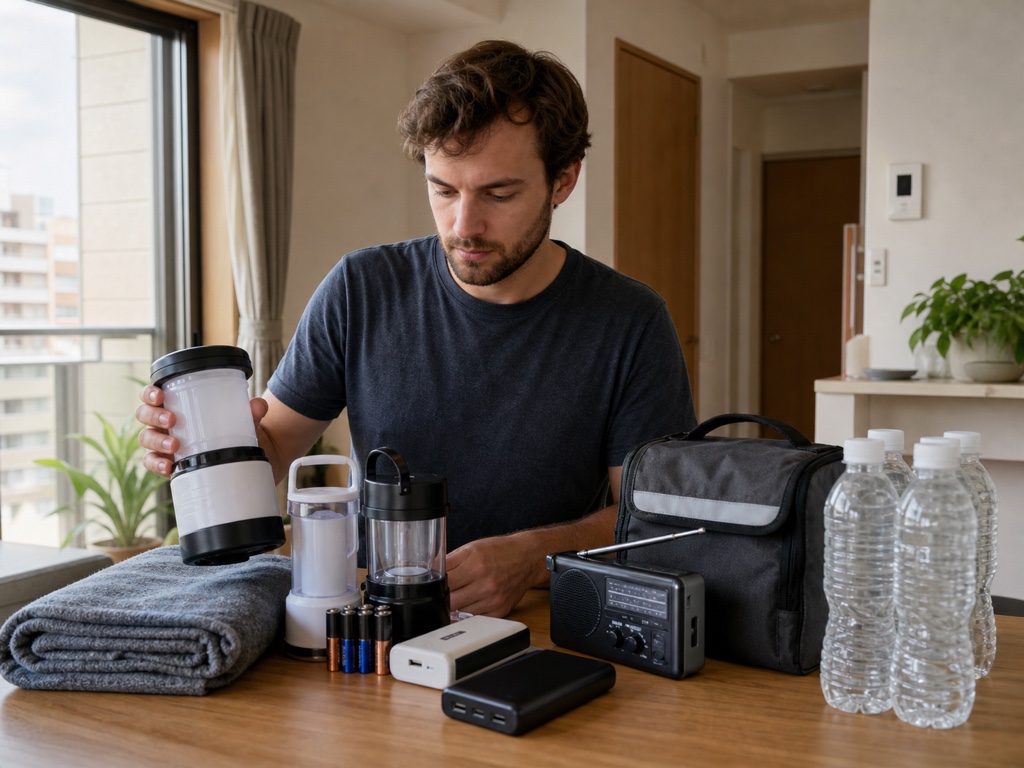
Keep a light and a charged power bank ready so you are never in the dark. Unplug sensitive appliances to avoid damage from a power surge when electricity returns. And watch the temperature: without air conditioning or heating, be careful of heatstroke in summer and cold in winter — stay hydrated and keep warm.
Overview
A power outage means the electricity supply to your home stops. In Japan they are often caused by typhoons and strong winds, earthquakes, heavy snowfall, or by very high demand during summer heat waves. Some outages last only minutes; others, especially after a major disaster, can last for days.
The biggest risks during a blackout are not the darkness itself but what people do in response: candles left burning, indoor use of fuel-burning stoves or generators, food spoiling in a warm fridge, and heat or cold building up once climate control stops. Planning ahead removes almost all of this danger.
Before: how to prepare
- Keep flashlights or battery lanterns where you can find them in the dark.
- Charge one or more power banks; consider a portable power station for longer outages.
- Keep spare batteries and a hand-crank or battery radio for information.
- Store water and some food that needs no cooking or refrigeration.
- Keep a cooler box and ice packs to protect food during longer outages.
- Keep some cash — card readers and ATMs may not work without power.
- Note which appliances are sensitive (PC, TV, router) so you can unplug them fast.
- Prefer battery lights over candles to avoid fire risk.
- Save your power company's outage information page and your phone in low-power mode.
During: stay safe
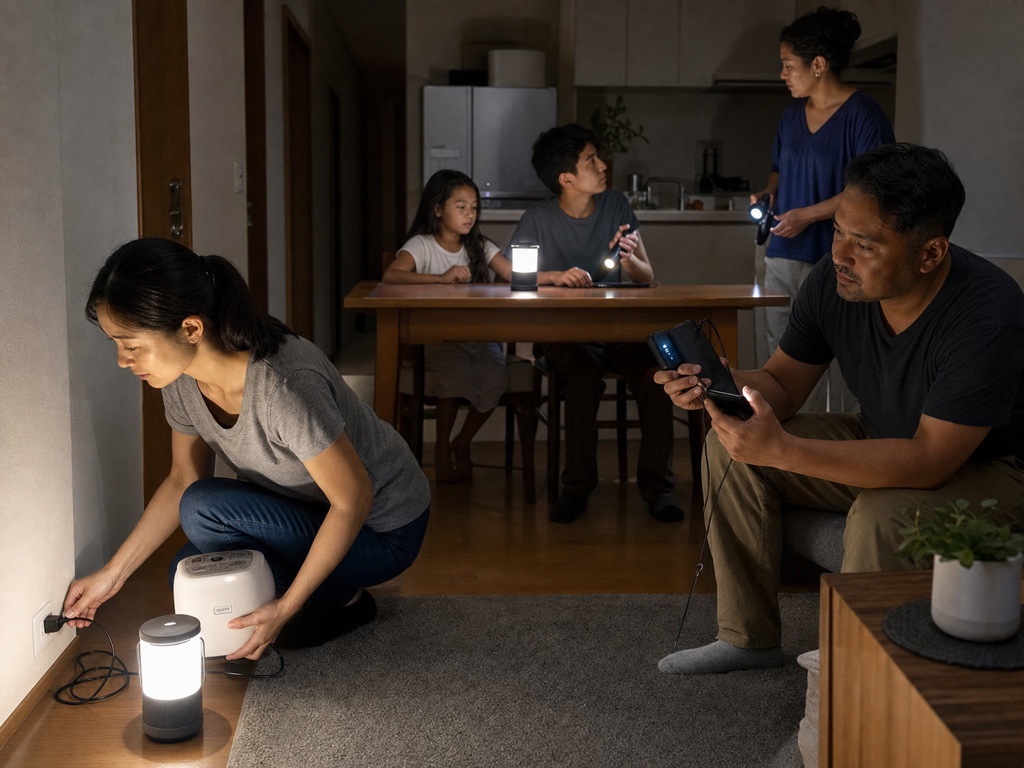
- Use a flashlight or battery lantern rather than candles or open flames.
- If you must use a candle, keep it away from curtains and never leave it unattended.
- Turn off and unplug the lights and appliances that were on when the power failed.
- Keep the fridge and freezer doors closed to keep food cold as long as possible.
- If you cook with a portable gas stove, use it only in a well-ventilated area.
- Never run a fuel-burning generator or charcoal indoors — carbon monoxide is deadly.
- Check your power company and local government for the cause and restoration time.
- Save phone battery: lower the screen brightness and close unused apps.
- Watch the indoor temperature and the people most at risk (children, elderly).
After: when power returns
- Turn appliances back on one at a time to avoid a sudden power surge.
- Reconnect sensitive electronics last, once the supply is stable.
- Before power returns, check that nothing has fallen onto or near outlets and heaters.
- An electrical fire (denki kasai) can start when power comes back to a damaged or buried appliance.
- If you leave home, turn off the breaker so nothing switches on while you are away.
- Inspect refrigerated and frozen food; when in doubt, throw it out.
- Reset clocks, timers, and any devices that lost their settings.
Heat and cold safety
When air conditioning or heating stops, indoor temperatures can become dangerous. In summer there is a real risk of heatstroke — drink water regularly, use hand fans, open windows for a breeze, and rest in the coolest room or a cooler public space. In winter, guard against hypothermia — wear layers, use blankets, and keep dry. Watch children, older people, and anyone with a health condition especially closely.
Common mistakes
- Relying only on a phone for light and information with no backup power.
- Leaving candles burning unattended instead of using battery lights.
- Running a generator, charcoal, or a fuel stove indoors — a carbon-monoxide risk.
- Opening the fridge and freezer repeatedly, letting the cold escape.
- Switching every appliance back on at once, causing a surge when power returns.
- Ignoring the rising heat in summer or falling temperature in winter.
Advice for foreign residents
- Register for your municipality's emergency alerts; many offer multilingual services.
- Save your electricity provider's outage page and customer number before you need them.
- Prepare an Emergency Contact Card in case you need language assistance.
- Learn the words teiden (power outage), fukkyū (restoration), and denki kasai (electrical fire).
- Know that evacuation shelters (hinanjo) are open to everyone, and some offer charging and cooling or heating during long outages.
Related tools
Frequently asked questions
How long will food stay safe in my fridge without power?
Is it safe to use candles during a blackout?
Can I use a generator or portable stove indoors?
Why should I unplug appliances during an outage?
Disclaimer
This guide is general information, not professional or official advice. During an emergency, always follow the latest instructions from your electricity provider and your local government. Verify safety-critical details with official sources.