Heavy Rain & Flood Guide for Japan
Japan sees heavy rain, typhoons, and flooding every year, especially during the rainy season and typhoon season. Floods and landslides can develop quickly. The single most important habit is to evacuate early — before the water rises. This guide is written for foreign residents.
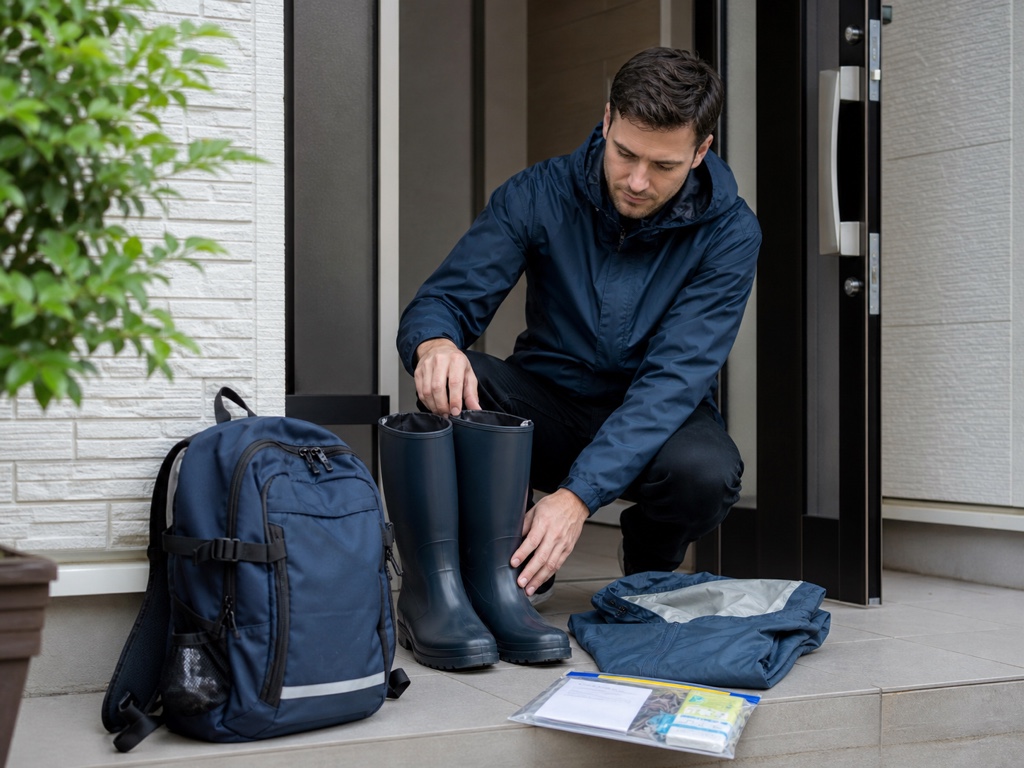
When heavy rain is forecast
Evacuate early — do not wait until the water rises. Leave while it is still light and roads are dry. Never walk or drive into floodwater. Even shallow, moving water can knock you down or sweep away a car, and you cannot see hazards such as open drains or missing manhole covers beneath the surface.
Overview
Heavy rain in Japan can cause rivers to overflow, drainage systems to back up, and slopes to collapse in landslides. These hazards can arrive fast — sometimes within hours of a warning. Unlike earthquakes, flooding usually comes with advance notice, so the key to safety is acting on that warning early instead of waiting to see how bad it gets.
Check your city's hazard map in advance to learn whether your home is in a flood or landslide risk area, and how deep the water could get. Know your nearest evacuation site and the safe route to reach it. When warnings are issued, follow the guidance of the Japan Meteorological Agency (JMA) and your local government.
Before: how to prepare
- Check your city's hazard map for flood and landslide risk near your home.
- Note the expected water depth and your nearest evacuation site.
- Plan a safe route that avoids rivers, underpasses, and low ground.
- Store water (3 L per person per day) and food for at least 3 days.
- Pack a grab-bag: light, radio, power bank, first aid, copies of documents.
- Keep important documents and valuables in a waterproof bag on a high shelf.
- Enable weather and evacuation alerts on your phone.
- Follow JMA warnings and your city's evacuation information.
- Clear balcony drains and gutters so water can flow away.
During: stay safe
- Leave while roads are still dry and it is light outside.
- Wear shoes you can walk in; take your grab-bag and go on foot.
- Tell family or neighbours where you are going.
- Never enter floodwater — even shallow, moving water is dangerous.
- Stay away from rivers, canals, and underpasses that fill quickly.
- Roads may be washed out or hide open drains beneath the surface.
- If you cannot safely reach a shelter, move to an upper floor (vertical evacuation).
- Go to the highest, sturdiest part of the building, away from slopes.
- Keep your phone and light with you and call for help if trapped.
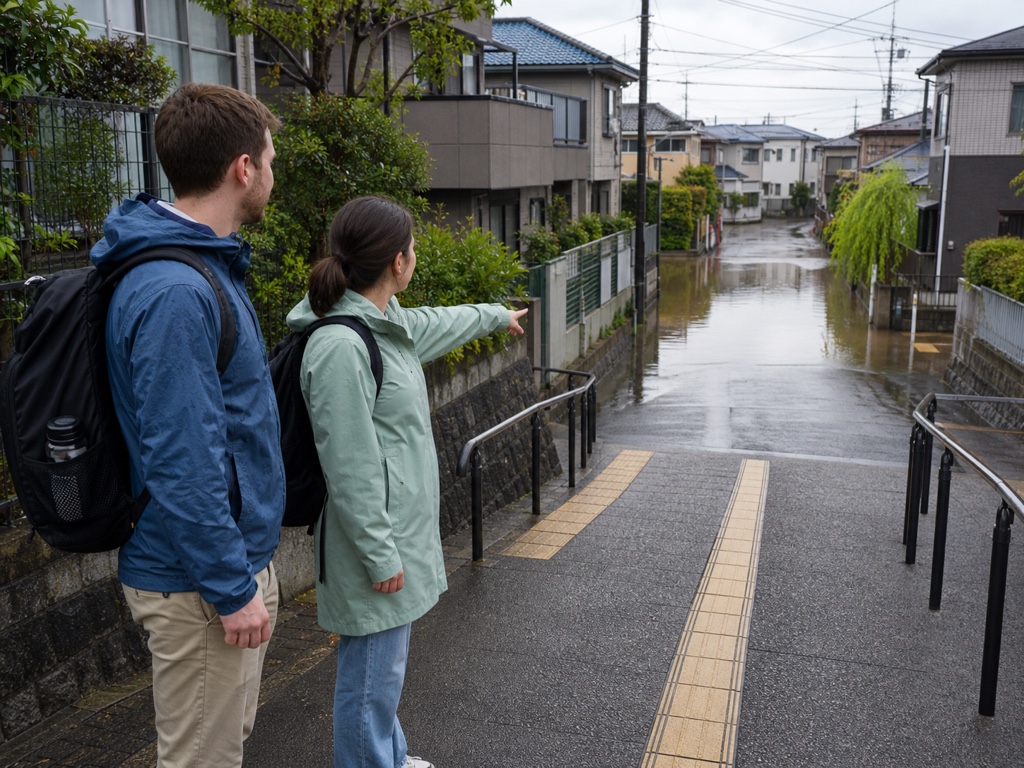
After: what to do next
- Do not return home until authorities say it is safe.
- Watch for landslides — cracks, tilting trees, or sudden spring water are warning signs.
- Floodwater may still be flowing or hiding damaged ground.
- Listen to the radio or check official sources for updates.
- More rain can fall, so keep monitoring warnings.
- Wear gloves and boots — floodwater can be contaminated.
- Take photos of damage for insurance before cleaning.
- Do not use electrical outlets or gas until they are checked.
Japan's 5-level warning system
Japan uses a 5-level scale for rain and flood disasters so you know when to act:
- Level 3 — Elderly people and others who need more time (or anyone who feels unsafe) should evacuate now.
- Level 4 — Everyone in the area must evacuate to a safe place.
- Level 5 — A disaster is already occurring or imminent. It may be too late to move safely, so take the best action available to protect your life immediately.
Do not wait for Level 5. Aim to be safe by Level 3 or 4.
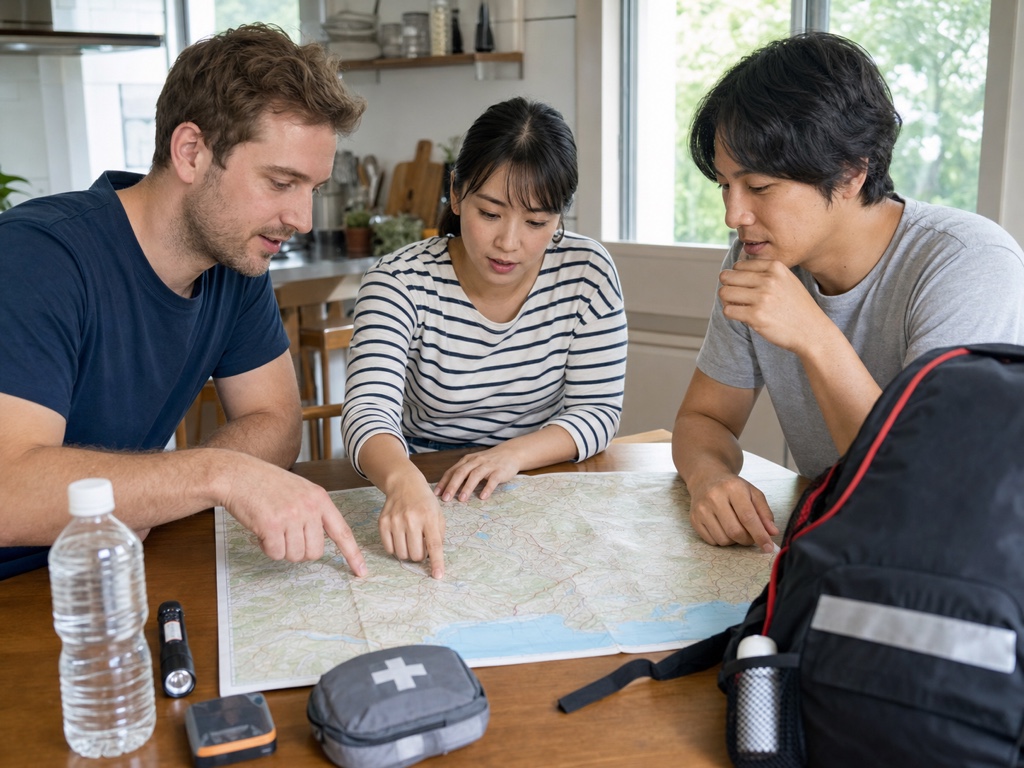
Common mistakes
- Waiting to see how bad it gets instead of evacuating early.
- Walking or driving into flooded roads — moving water is stronger than it looks.
- Using underpasses or riverside roads, which flood first and fastest.
- Going outside to check a river or drain during heavy rain.
- Ignoring evacuation orders because it "looks fine" from a window.
Advice for foreign residents
- Register for your municipality's emergency alerts; many offer multilingual services.
- Prepare an Emergency Contact Card in case you need language assistance.
- Keep copies of your residence card, passport, and insurance card in a waterproof bag.
- Learn the words oame (heavy rain), kozui (flood), hinan (evacuation), and dosha-saigai (landslide disaster).
- Know that evacuation shelters (hinanjo) are open to everyone, including foreign residents.
Related tools
Frequently asked questions
When should I evacuate during heavy rain?
Is it safe to walk through shallow floodwater?
What is the difference between vertical and horizontal evacuation?
Can foreign residents use evacuation shelters?
Disclaimer
This guide is general information, not professional or official advice. During an emergency, always follow the latest instructions from the Japan Meteorological Agency and your local government. Verify safety-critical details with official sources.