Earthquake Guide for Japan
Japan is one of the most seismically active countries in the world. You cannot predict an earthquake — but a few simple habits and supplies dramatically improve your safety. This guide is written for foreign residents.
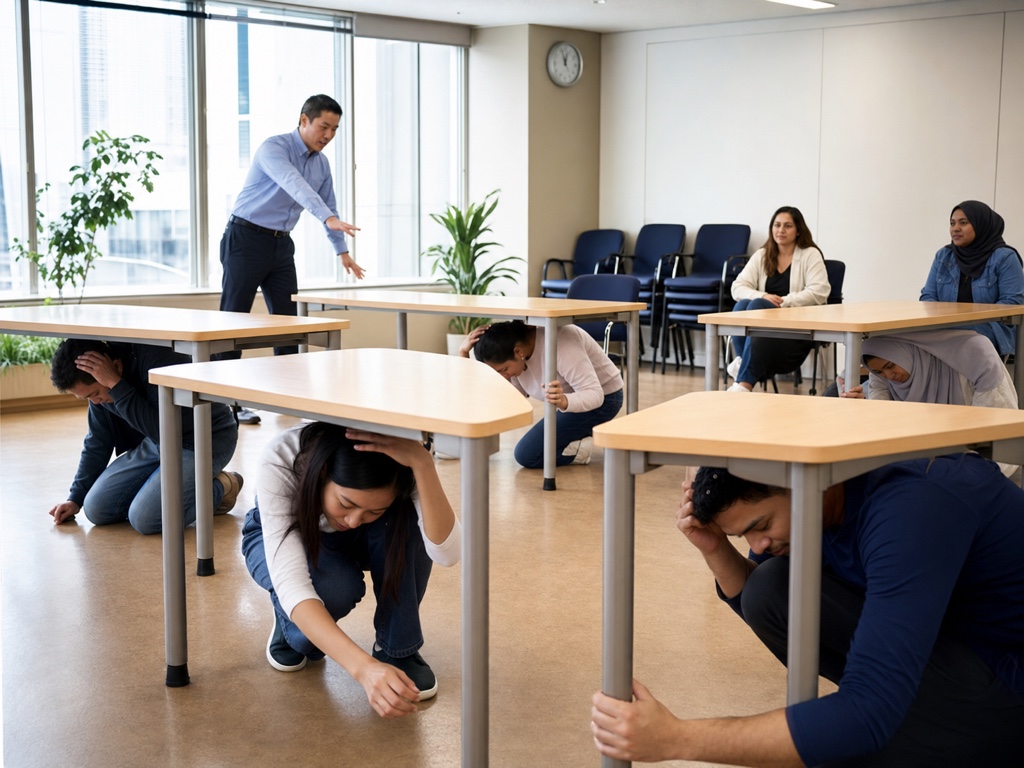
During strong shaking
Drop, Cover, and Hold On. Get under a sturdy desk, protect your head and neck, and wait for the shaking to stop. Do not run outside. If you are near the coast, move to higher ground immediately after the shaking — a tsunami can arrive within minutes.
Overview
Earthquakes happen frequently in Japan, from small tremors you barely notice to major events. Most injuries are not caused by collapsing buildings — which are generally well engineered in Japan — but by falling furniture, broken glass, and panic. Securing your home and knowing how to react are the two most valuable things you can do.
Japan uses a seismic intensity scale (shindo) from 0 to 7 that describes shaking at a location, which is different from magnitude (the size of the quake). You may also receive an Earthquake Early Warning on your phone a few seconds before strong shaking arrives — use those seconds to take cover.
Before: how to prepare
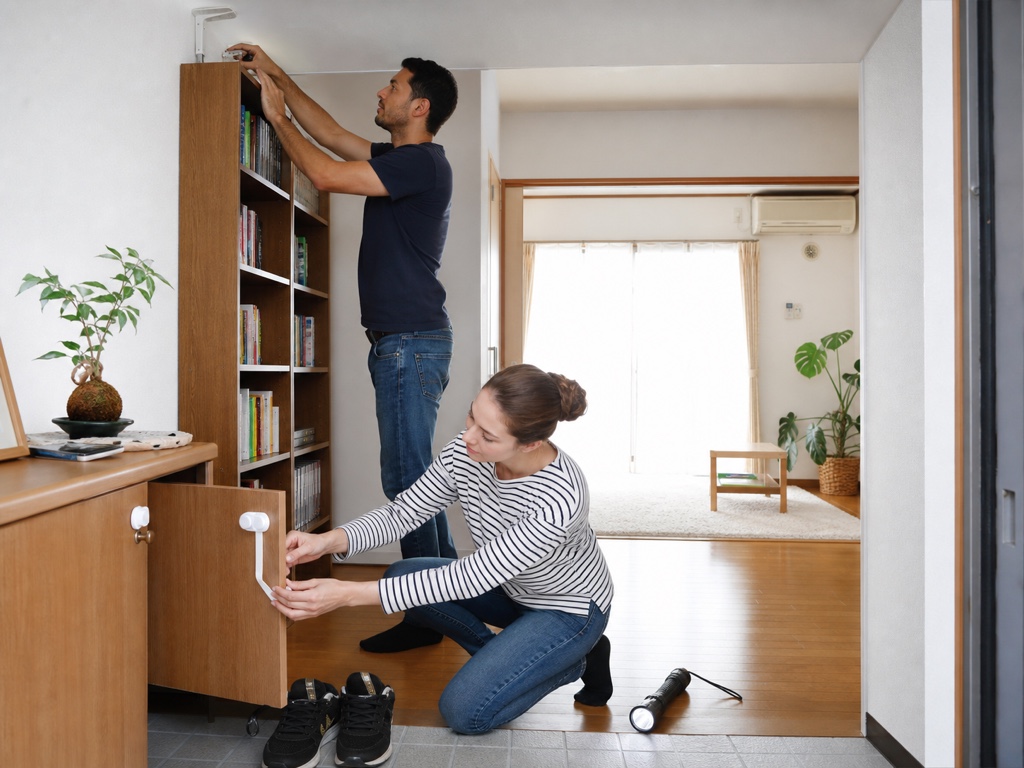
- Fix tall furniture and appliances to walls with brackets or tension rods.
- Keep heavy objects on low shelves; add latches to cupboards.
- Keep shoes and a flashlight by your bed (broken glass is common).
- Store water (3 L per person per day) and food for at least 3 days.
- Pack a grab-bag: light, radio, power bank, first aid, copies of documents.
- Keep some cash — ATMs and card readers may not work.
- Find your nearest evacuation site on your city's hazard map.
- Agree a family meeting point and practice the 171 message dial.
- Enable Earthquake Early Warnings on your phone.
During: protect yourself
- Drop, Cover, Hold On under a sturdy table; protect your head.
- Stay away from windows and tall furniture.
- Do not rush outside during shaking — falling objects are the danger.
- Move away from buildings, walls, vending machines, and power lines.
- Protect your head with a bag and crouch in an open space.
- In a train or elevator, hold on; follow staff and announcements.
- While driving, slow down, pull to the left, and stop; leave the key if you evacuate.
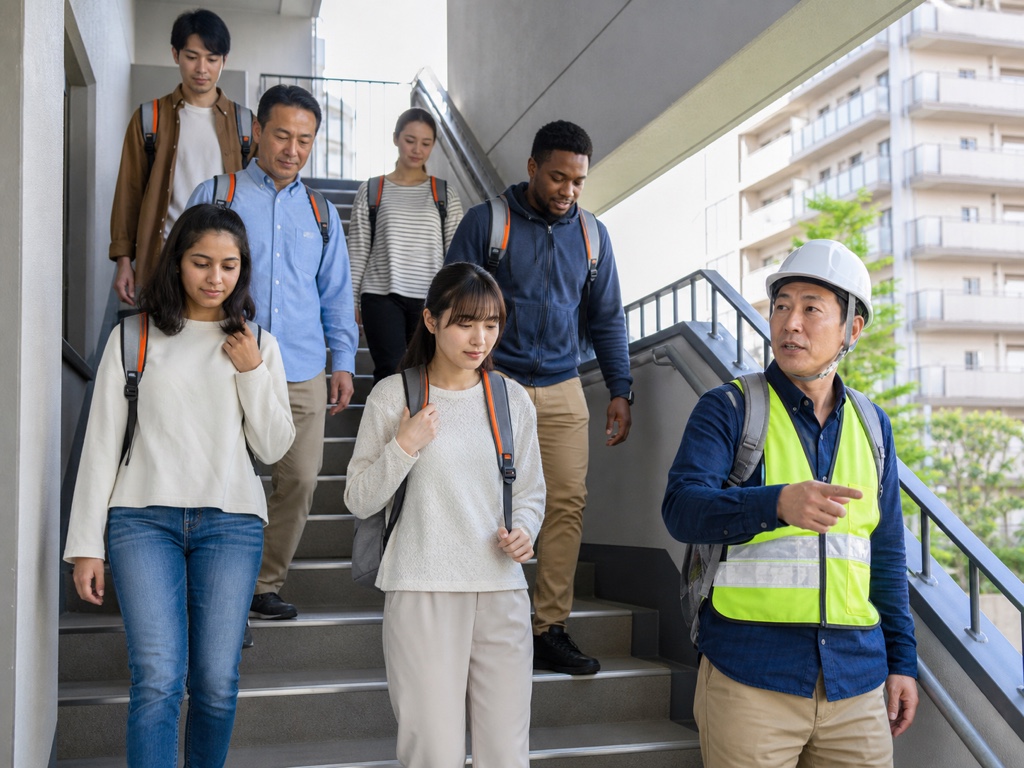
After: what to do next
- Check yourself and others for injuries.
- Turn off gas if you smell it; do not use open flames.
- Open a door to secure an exit route (frames can jam).
- Listen to the radio or check official sources for tsunami and aftershock info.
- Expect aftershocks — they can be strong.
- Wear shoes; turn off the electricity breaker before leaving.
- Take your grab-bag and go to your designated evacuation site on foot.
Tsunami safety
If you are near the coast and feel strong or long shaking, or a tsunami warning is issued, move to high ground or a tsunami evacuation building immediately — do not wait to see the wave and do not go to the shore. Follow signs and the instructions of local authorities.
Common mistakes
- Running outside during shaking (falling glass and objects cause most injuries).
- Not securing furniture — the cheapest, most effective preparation.
- Relying only on a phone for light and information with no backup power.
- Going to the coast to "check" after strong shaking.
- Assuming the water and food you have will last — measure it with our calculators.
Advice for foreign residents
- Register for your municipality's emergency alerts; many offer multilingual services.
- Prepare an Emergency Contact Card in case you need language assistance.
- Keep copies of your residence card, passport, and insurance card in your grab-bag.
- Learn the words jishin (earthquake), tsunami, and hinan (evacuation).
- Know that evacuation shelters (hinanjo) are open to everyone, including foreign residents.
Related tools
Frequently asked questions
What should I do the moment an earthquake starts?
Should I open the door during the earthquake?
How much water and food should I store?
Can foreign residents use evacuation shelters?
Disclaimer
This guide is general information, not professional or official advice. During an emergency, always follow the latest instructions from the Japan Meteorological Agency and your local government. Verify safety-critical details with official sources.