Rolling Stock: The Easy Japanese Way to Stockpile Emergency Food
You do not need a bunker full of survival rations. "Rolling stock" is a simple habit that keeps a few days of food ready at all times — using food you already like and eat.
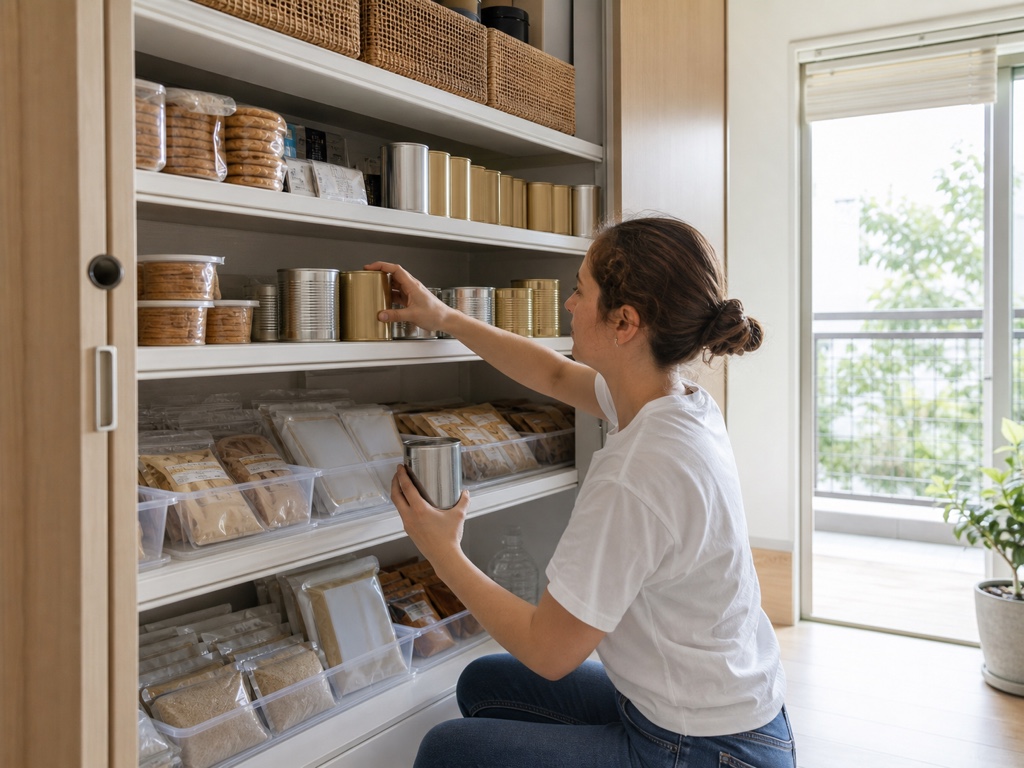
After a big earthquake or typhoon, shops can close and deliveries can stop for several days. Keeping some food at home is one of the simplest ways to protect your household. The challenge many people face is that stored food quietly expires before it is ever used. "Rolling stock" solves that problem with one easy idea.
What is "rolling stock"?
Rolling stock is a popular method in Japan for keeping emergency food fresh. Instead of buying special long-storage rations and hiding them away, you buy a little extra of the normal foods you already eat. You then eat the oldest items first and buy new ones to replace them. Your stock keeps "rolling" — it is always being used and refilled, so nothing sits on the shelf until it expires. The result is a steady supply of familiar, in-date food that is ready whenever you need it.
How much should you keep?
A common goal is at least 3 days of food per person, and ideally about 7 days if you have the space. Count the number of people (and pets) in your home, then multiply. Because rolling stock uses everyday food, you may already be close without realising it — the aim is simply to keep the shelf a little fuller than usual. For exact numbers based on your household, try our food calculator.
Good foods to keep
Choose things that store well and that you actually enjoy eating:
- Rice and alpha-rice (instant rice that needs only water or hot water).
- Canned goods — fish, meat, beans, vegetables, and fruit.
- Retort pouch meals — curry, rice bowls, and soups that are ready to heat.
- Dried noodles and pasta, plus instant miso soup.
- Long-life milk and shelf-stable drinks.
- Snacks such as biscuits, nuts, chocolate, and dried fruit — easy energy and comfort.
Do not forget to keep some drinking water too. Food and water go together in any home stock.
Cooking without power
If the electricity or gas is off, you still want a way to boil water and heat food. A portable cassette gas stove (the tabletop kind used for hot pot) with a few spare gas canisters is a common choice in Japan. Keep the canisters within their use-by date and store them somewhere cool, away from heat. Always use a cassette stove in a well-ventilated space, never in a sealed room, and follow the maker's instructions. A simple manual can opener is also worth keeping, in case your canned food does not have a pull-tab lid.
If anyone in your home has food allergies, a special diet, or follows halal or vegetarian eating, read labels carefully and build your stock from foods that suit them. Familiar food you can safely eat is far more useful in an emergency than rations you cannot. Keeping a few extra of your trusted staples is the whole point of rolling stock.
Check the dates every month
Rolling stock only works if you keep it moving. Pick one regular time — for example, the first weekend of each month — to glance through your shelf. Move older items to the front, eat or cook anything close to its date, and add replacements to your next shopping trip. This small habit keeps everything fresh and means you are never caught with an empty or expired stock.
Where to go next
Disclaimer
This article is general information, not official advice. During an emergency, follow the latest instructions from Japanese national and local authorities.